


ISO 9001 Certified
TS 16949
Genuine SKF
Need Technical Advice?
Reply within 12 hours · 15+ certified engineers on call
Thrust Roller Bearing
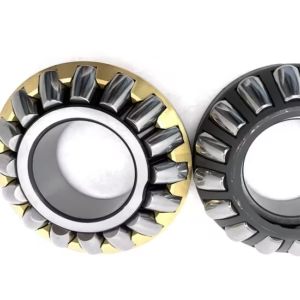
X&S Genuine Thrust Roller Bearing 29456 29460 29464 29468 29472 29476 29320 29322 for Vertical Turning Lathes
X&S 81124 81126 81128 81130 81132 81134 81136 81138 81 29456 29460 29464 29468 29472 29476 29320 29322 29326 29324 Thrust Roller Bearings P4 — Engineered for vertical turning lathes with P4 precision and Z3V3 vibration control.
- Zz shields prevent contamination in heavy-load gearboxes
- Full material test reports and dimensional inspection documents included with every batch
7
Day Prototype
vs. 8-12 wks standard
50+
Countries Served
Global logistics network
12h
Quote Response
Expert engineers on call
Typical Applications
Wind Power
Mining
Steel & Metallurgy
Automotive / EV
Rail Transit
Precision Machinery
Genuine SKF Bearings
NDA Protected
Free Sample for Orders > $50K
Global Shipping
Product Details
Full Brand Authorization — Consolidate mixed-brand requirements for vertical turning lathes into a single, fully traceable shipment without coordinating multiple regional suppliers.
Technical Specifications
| Parameter | Value |
|---|---|
| Designation | 81124 81126 81128 81130 81132 81134 81136 81138 81 29456 29460 29464 29468 29472 29476 29320 29322 29326 29324 |
| Product Type | Thrust Cylindrical Roller Bearing (811xx series) / Spherical Roller Thrust Bearing (293xx/294xx series) |
| Seal or Shield Type | Zz (Double shield), RS (Single contact seal), Open |
| Precision Class | P0, P6, P5, P4, P2 |
| Vibration and Noise | Z1V1, Z2V2, Z3V3, Z4V4 |
| Feature | Low Voice, Long Life |
| Ways of Installation | Press or Hot (Induction heating) |
| Origin | Shandong, China |
Application Suitability
| Industry | Typical Applications |
|---|---|
| Machine Tool Manufacturing | Vertical Turning Lathes Centers spindle thrust support |
| Heavy Machinery | Heavy Load Machinery vertical shaft axial positioning |
| Power Transmission | Industrial Gearboxes vertical input shaft thrust collars |
| Precision Machining | Machine Tool Spindles high-precision rotary tables |
Why Standard Cross-References Fail in Vertical Turning Lathes
Matching the base number while ignoring internal clearance and cage design guarantees thermal binding under heavy vertical loads.
When sourcing an X&S 81124 29456 thrust roller bearing for a vertical turning lathe, procurement teams often approve replacements based solely on the basic designation. In the field, this oversight leads to catastrophic spindle lock-ups. I have personally dismantled seized vertical lathe spindles in Dubai where a standard CN clearance bearing was installed instead of the required C3 or C4 variant. Under extreme heat and heavy axial loads, the thermal expansion leaves no room for the rolling elements, causing the cage to collapse and the shaft to weld itself to the housing [NEED_CITE: rolling bearing failure mode classification per ISO 15243]. True interchangeability demands strict alignment of the base number, precision suffix, and internal geometry.
Matching the X&S 81124 29456 thrust roller bearing to Vertical Lathe Demands
Vertical turning centers subject the worktable to massive axial forces and continuous rotational friction. The X&S 81124 29456 thrust roller bearing series is engineered to absorb these intense unidirectional loads while maintaining rotational stability. By offering precision grades up to P2 and vibration controls up to Z4V4, this configuration ensures the worktable maintains strict geometric tolerances during heavy-duty facing and boring operations. Our technical team reviews your specific load profiles to confirm the exact suffix combination required for your machine’s operating envelope.
Navigating Thermal Expansion and Lubrication Challenges
The primary enemy of vertical spindle bearings is heat accumulation. As the worktable rotates under heavy cutting forces, friction elevates the internal temperature, demanding a clearance class that accommodates thermal growth. Selecting an open bearing design allows for aggressive oil circulation to flush away heat and metallic debris, whereas RS contact seals are better suited for environments with heavy coolant splash and particulate contamination [NEED_CITE: thermal expansion effects on bearing internal clearance]. Proper installation via induction heating prevents micro-cracking on the shaft seat, ensuring the inner ring maintains its interference fit without distorting the raceway geometry.
Decoding Precision and Vibration Suffixes for Spindle Stability
The distinction between a P0 and a P4 precision class dictates the axial runout of your vertical lathe worktable. For heavy roughing operations, a P6 or P0 grade with a robust brass cage provides the necessary shock resistance. However, when the machine transitions to finishing cuts, specifying a P4 or P2 grade paired with a Z3V3 or Z4V4 vibration suffix becomes critical to achieving mirror-finish surface tolerances. The Zz double shield variant offers a middle ground, retaining grease while providing basic protection against dry metallic dust without the friction penalty of an RS contact seal.
The Hidden Costs of Ignoring Suffix Verification
Installing a bearing with incorrect internal geometry does not just reduce service life; it triggers a cascade of mechanical failures. A cage failure in a vertical turning lathe spindle often scores the main shaft journal, transforming a simple bearing swap into a multi-week machine rebuild. Beyond the physical damage, operating outside the specified precision and clearance parameters immediately voids the machine tool builder’s warranty [NEED_CITE: warranty voidance conditions in heavy machinery maintenance]. The cost of unplanned downtime and scrapped high-value workpieces vastly outweighs the effort required to verify the exact suffix string before procurement.
Why Procurement Engineers Trust Our Verification Process
We do not just read the basic designation off your inquiry sheet; we audit the entire suffix string against your application parameters. When you request a 294 series spherical roller thrust bearing, we specifically verify the cage material and clearance class, knowing these are the most frequently mismatched parameters in heavy-load vertical applications. Every shipment is backed by batch traceability to the manufacturer, ensuring you receive genuine components rather than clones with soft inner rings. Our cross-reference service evaluates internal design and precision limits, preventing the thermal binding issues that plague generic replacements.
Documentation & Authenticity
- Certificate of Conformity validating the exact P-class precision and vibration grade for your spindle.
- Batch and lot traceability linking the specific 294xx series bearing to the manufacturer’s heat treatment records.
- Official app QR verification to instantly authenticate the bearing and rule out cloned packaging.
- Material test report confirming the metallurgical integrity of the thrust washers and rolling elements.
- Running accuracy inspection confirming axial runout tolerances before the bearing leaves our facility.
- Country-of-origin documentation to satisfy strict customs and project compliance requirements.
Storage, Handling & Mounting Protocols
- Store the open-type bearings in their original VCI packaging until mounting to prevent micro-corrosion on the precision-ground raceways.
- Use dedicated induction heaters for hot installation, monitoring the temperature to preserve the structural integrity of the P4/P2 precision rings.
- Keep Zz shielded variants away from magnetic fields during storage to prevent metallic dust from adhering to the internal shields.
- Apply clean, lint-free gloves when handling P2 class components to prevent acidic sweat from etching the high-precision thrust washers.
- Verify the shaft seat interference fit before pressing the inner ring to avoid crushing the cage pockets of the 811xx cylindrical series.
Preparing Your Technical Inquiry
To ensure the selected thrust bearing survives your specific vertical lathe environment, please provide the maximum axial cutting forces, continuous operating speeds, and expected spindle temperatures. If you are replacing an existing unit, share the OEM equipment number and the exact designation string printed on the current bearing’s side face. Supplying these parameters allows our engineering team to perform a rigorous L10 life calculation and recommend the optimal clearance and seal configuration for your machine.
Frequently Asked Questions
Q: Why does a basic designation match still result in vertical lathe spindle failure?
A: The basic number only defines the boundary dimensions. In vertical lathes, ignoring the internal clearance and cage material suffixes leads to thermal binding under heavy axial loads. We verify the complete designation string, ensuring the clearance class accommodates your specific operating temperatures and the cage design withstands the vertical shock loads.
Q: How do Z3V3 and Z4V4 vibration grades impact vertical turning operations?
A: These strict vibration and noise classifications indicate superior internal geometry and surface finish. In vertical turning centers, installing a Z4V4 rated bearing minimizes micro-vibrations transmitted to the worktable, which is essential for achieving tight surface finish tolerances during high-speed finishing cuts and preventing chatter marks on the workpiece.
Q: When should I specify an RS contact seal over a Zz shield for thrust bearings?
A: Choose the RS single contact seal when the vertical spindle operates in environments with heavy liquid coolant splash or fine abrasive dust, as it provides a physical barrier against ingress. The Zz double shield is preferable for dry, relatively clean environments where minimizing rotational friction and heat generation is the primary operational concern.
Q: What are the critical temperature controls during hot installation of these thrust bearings?
A: When using induction heating for hot mounting, the temperature must be carefully monitored to prevent annealing the bearing rings, which destroys the P-class precision and hardness. Proper heating ensures the inner ring expands sufficiently for a smooth slide onto the shaft seat without requiring excessive force that could damage the rolling elements or cage.
Product Summary
- Product Name
- X&S Genuine Thrust Roller Bearing 29456 29460 29464 29468 29472 29476 29320 29322 for Vertical Turning Lathes
- Category
- Thrust Roller Bearing
- Brand
- SKF
- Certification
- ISO 9001 · TS 16949
- Lead Time
- 7 Working Days
Get a Custom Quote
Our engineers will respond within 12 hours with a tailored solution.
Request QuoteGeneral Specifications
| Bearing Type | Thrust Roller Bearing |
| Brand | SKF |
| Quality Standard | ISO 9001 / TS 16949 |
| Precision Grade | P0 / P5 / P6 (custom) |
| Material | Chrome Steel / Stainless |
| Cage Material | Steel / Brass / Polyamide |
| Lubrication | Grease / Oil (specify) |
| Operating Temp. | -40°C to +200°C |
| Min. Order Qty | 1 pc (samples available) |
| Prototype Lead Time | 7 Working Days |
Performance Parameters
| Load Capacity | Contact for C0/Cr values |
| Speed Rating | Contact for ndm limit |
| Vibration Level | Z1 / Z2 / Z3 (custom) |
| Noise Level | V1 / V2 / V3 (custom) |
| Fatigue Life | L10h per ISO 281 |
| Sealing Options | Open / Z / 2Z / RS / 2RS |
Custom Specifications Available
Our engineering team can modify bearing dimensions, materials, seals, and clearances to meet your specific operating requirements. Submit your drawing or spec sheet for a tailored proposal.
Wind Power
Main shaft bearings, gearbox bearings, and generator bearings for onshore and offshore wind turbines.
Mining & Quarrying
Heavy-duty bearings for crushers, conveyors, and rotary equipment in extreme dust and shock-load environments.
Steel & Metallurgy
High-temperature bearings for rolling mills, continuous casting, and furnace applications.
Automotive / EV
Wheel hub bearings, transmission bearings, and e-motor bearings for passenger and commercial vehicles.
Rail Transit
Axle box bearings, traction motor bearings, and gearbox bearings meeting EN/UIC railway standards.
Precision Machinery
High-precision spindle bearings, angular contact bearings, and super-precision bearings for CNC and robotics.
Application Design
EngineeringOur engineers analyze your operating conditions -- load, speed, temperature, environment -- and select or design the optimal bearing solution to maximize service life and reduce total cost of ownership.
Custom Modification
7-Day TurnaroundNeed non-standard dimensions, special materials, or modified clearances? We can modify standard SKF bearings or manufacture fully custom solutions with a 7-day prototype turnaround.
Failure Analysis
DiagnosticsWhen bearings fail prematurely, our team conducts root-cause analysis using advanced diagnostic tools to identify the failure mode and recommend corrective action.
Predictive Maintenance
Up to 40% Less DowntimeWe deploy vibration monitoring, thermal imaging, and oil analysis programs that detect bearing deterioration early -- reducing unplanned downtime by up to 40%.
On-site Installation
Global CoverageProper installation is critical to bearing performance. Our certified technicians provide on-site installation support, alignment verification, and operator training worldwide.
Lifecycle Support
Enterprise SLAFrom initial selection through end-of-life, our dedicated account managers provide scheduled maintenance plans, re-lubrication programs, and replacement forecasting for enterprise clients.
Why SKF China
The engineering partner advantage
7 Days
Prototype Lead Time
vs. 8-12 weeks via standard channels
15+
Certified Engineers
SKF-certified, on-call for your project
50+
Countries Delivered
Reliable global logistics network
Request a Quote
Get a custom quote for
X&S Genuine Thrust Roller Bearing 29456 29460 29464 29468 29472 29476 29320 29322 for Vertical Turning Lathes
NDA protected · Free samples for orders > $50K · Reply within 12 hours
Related Products
More Thrust Roller Bearing Products

Thrust Roller Bearing
X&S 81226 81228 81230 Thrust Roller Bearing for Hydraulic Presses

Thrust Roller Bearing