
![X&S 6815 6814 6813 6812 6811 6810 Deep Groove Ball Bearing for Auto Parts [WARN] draft identifier mismatch](https://skfip.com/wp-content/uploads/2026/09/xs-6815-6814-6813-6812-6811-6810-deep-groove-ball-bearing-for-auto-parts-warn-draft-identifier-mismatch-64a6c5.avif)
![X&S 61818-2RS 61819 61820 Thin Wall Deep Groove Ball Bearing [WARN] draft identifier mismatch](https://skfip.com/wp-content/uploads/2026/09/xs-61818-2rs-61819-61820-thin-wall-deep-groove-ball-bearing-warn-draft-identifier-mismatch-cb11b0.avif)
ISO 9001 Certified
TS 16949
Genuine SKF
Need Technical Advice?
Reply within 12 hours · 15+ certified engineers on call
Deep Groove Ball Bearing
X&S 61818-2RS 61819 61820 Thin Wall Deep Groove Ball Bearing [WARN] draft identifier mismatch
61818-2RS 61819 61820 60900 61901 Thin Wall Deep Groove Ball Bearings — precision-engineered for agricultural machinery and electric motors.
- The 2RS suffix indicates double contact seals on both sides, delivering maintenance-free operation and reliable contamination protection.
- Verify authenticity instantly through the brand official app QR scanning channel for every delivered batch.
7
Day Prototype
vs. 8-12 wks standard
50+
Countries Served
Global logistics network
12h
Quote Response
Expert engineers on call
Typical Applications
Wind Power
Mining
Steel & Metallurgy
Automotive / EV
Rail Transit
Precision Machinery
Genuine SKF Bearings
NDA Protected
Free Sample for Orders > $50K
Global Shipping
Product Details
Precision Cross-Reference Alignment — Every X&S thin-section designation is verified against OEM equipment numbers for exact clearance, cage, and seal matching.
Technical Specifications
| Parameter | Value |
|---|---|
| Designation | 61818-2RS / 61819 / 61820 / 60900 / 61901 |
| Bearing Type | Deep Groove Ball Bearing |
| Rows Number | Single Row |
| Seal or Shield Type | 2RS / ZZ / Open |
| Precision Class | P0 / P6 / P5 / P4 |
| Clearance Class | C0 / C1 / C2 / C3 / C4 |
| Material | Bearing Steel |
| Lubrication | Grease or Oil |
| Vibration Level | Z1V1 / Z2V2 / Z3V3 / Z4V4 |
| Origin | Shandong, China |
| HS Code | 8482102000 |
Application Suitability
| Industry | Typical Applications |
|---|---|
| Agricultural Machinery | Combine harvester rotor shafts, high-dust seeding mechanisms |
| Electric Motors | Low-noise cooling fan assemblies, servo motor housings |
| Industrial Gearboxes | High-speed intermediate shafts, planetary gear supports |
| Material Handling | Conveyor guide rollers, automated sorting pivots |
| Pumps & Compressors | Impeller shaft supports, vacuum pump rotors |
Why Thin-Wall Bearings Fail Before the Steel Does
Thermal binding from incorrect internal clearance destroys thin-section races long before fatigue sets in.
When procurement teams source an X&S 61818-2RS deep groove ball bearing based solely on the base designation, they frequently overlook the critical clearance suffix. In high-dust agricultural environments, a standard C0 clearance bearing installed on a combine harvester rotor will expand under friction heat. Without the thermal expansion buffer of a C3 or C4 clearance, the internal gap vanishes. The rolling elements skid, the cage fractures, and the entire shaft seizes. This exact failure mode accounts for a significant share of premature downtime in harvesting equipment [NEED_CITE: rolling bearing failure mode classification per ISO 15243]. Sourcing the correct thin-wall bearing requires looking past the basic number to validate the exact internal geometry required by the operating temperature.
Matching the X&S 61818-2RS Deep Groove Ball Bearing to Your Operating Environment
Selecting the right variant from this ultra-thin wall series depends entirely on the contamination level and thermal profile of your machinery. Our technical team reviews your specific radial loads and rotational speeds to confirm whether a 2RS contact seal, a ZZ shield, or an open configuration delivers the optimal balance of friction and protection. By evaluating the complete application parameters, we ensure the selected X&S 61818-2RS deep groove ball bearing maintains its structural integrity without succumbing to premature cage wear.
Navigating Thermal and Contamination Challenges in Thin Sections
Thin-wall deep groove ball bearings possess inherently lower cross-sectional rigidity, making them highly sensitive to thermal gradients and particulate ingress. In agricultural gearboxes, fine silica dust easily penetrates inadequate seals, acting as a lapping compound that accelerates raceway wear. While 2RS contact seals provide superior exclusion of these abrasives, they generate higher friction torque than non-contact ZZ shields. If the application involves sustained high-speed rotation, this seal friction can elevate internal temperatures beyond the thermal limit of standard bearing steel, necessitating a wider internal clearance to compensate for the differential expansion between the shaft and housing [NEED_CITE: thermal expansion effects on bearing internal clearance per ISO 281].
Decoding Seal Configurations and Precision Tolerances
The distinction between 2RS and ZZ suffixes dictates the operational ceiling of these thin-section components. The 2RS configuration utilizes double contact rubber seals that physically wipe the inner ring land, offering maximum protection against the heavy particulate loads found in harvesting and conveying equipment. Conversely, the ZZ metal shields maintain a small labyrinth gap, minimizing friction for high-speed electric motor applications where heat generation must be strictly controlled. Furthermore, selecting a P5 or P4 precision class reduces running accuracy deviations, which is critical when mounting these bearings into lightweight aluminum housings where even minor geometric distortions can cause uneven load distribution across the thin raceways.
The Hidden Costs of Suffix and Clearance Misalignment
Installing a bearing with mismatched internal geometry leads directly to catastrophic damage and unplanned downtime. When a standard clearance bearing is forced into a tight interference fit on a thin-walled shaft, the resulting hoop stress compresses the inner ring, eliminating the operational clearance entirely. According to ISO 15243 frameworks, this installation-induced preload causes excessive sliding friction, rapid lubricant degradation, and eventual smearing of the raceways [NEED_CITE: bearing damage classification and root cause analysis]. The financial impact extends far beyond the component cost, encompassing secondary shaft damage, voided equipment warranties, and lost production hours during peak operational seasons.
Why Engineering Verification Matters for Thin-Section Procurement
Our distribution model prioritizes technical accuracy over simple part-number matching. Cross-referencing thin-wall bearings often yields base numbers that align perfectly while ignoring critical suffix variations; we verify the exact cage material and seal type against your OEM equipment manuals to prevent field failures. Every X&S shipment includes batch traceability, ensuring you receive genuine bearing steel rather than counterfeit rings with soft inner cores that pass casual visual inspections. We also provide application-based selection reviews, calculating the required thermal expansion buffer to prevent the exact binding failures we frequently see in agricultural MRO operations. Finally, our single-source authorization covers all major international brands, allowing you to consolidate mixed-brand requirements into one verified, fully documented shipment.
Documentation & Authenticity
- Certificate of Conformity verifying the exact P-class precision and clearance suffix for your specific thin-wall designation.
- Manufacturer batch and lot traceability linking each 618-series bearing to its original production run.
- Official app QR verification to instantly confirm authenticity and reject cloned codes on counterfeit thin-section parts.
- Material test report confirming the metallurgical integrity of the bearing steel rings and rolling elements.
- Dimensional and running accuracy inspection report validating the ultra-thin wall tolerances before dispatch.
Storage, Handling & Mounting Protocols
- Retain original moisture-barrier packaging until installation to prevent micro-corrosion on the exposed thin-wall raceways.
- Use induction heating for inner ring mounting, avoiding localized torch heating that distorts the thin cross-section.
- Never apply axial force through the rolling elements, as the thin raceways are highly susceptible to brinelling during press-fits.
- Verify shaft and housing roundness with precision gauges, as thin-section bearings readily conform to underlying geometric distortions.
- Store 2RS sealed variants away from direct UV exposure to prevent premature degradation of the contact seal elastomers.
Requesting Technical Review and Cross-Reference Validation
To ensure the selected thin-wall bearing survives your specific operating conditions, please provide your radial and axial load profiles, maximum rotational speeds, and steady-state operating temperatures. Supplying the exact OEM equipment number or the original manufacturer’s part number allows our engineering team to perform a comprehensive cross-reference check, verifying that the clearance, seal type, and precision class align perfectly with your machinery’s design intent. This technical复核 prevents the costly installation of dimensionally correct but internally incompatible components.
Frequently Asked Questions
Q: How can I verify the authenticity of thin-wall bearings and avoid cloned QR codes?
A: Counterfeiters frequently clone QR codes on thin-section bearings, but the linked data often lacks specific batch details. Procure strictly through authorized channels and scan the code using the brand’s official application, not a generic reader. We provide full batch traceability and material test reports, allowing you to verify the metallurgical hardness and dimensional accuracy of the thin rings against factory specifications.
Q: Why must clearance and seal suffixes align perfectly during cross-referencing?
A: A base designation match only confirms the physical envelope dimensions. If your equipment requires a C3 clearance for thermal expansion but receives a C0 variant, the thin raceways will bind under operating heat. Similarly, substituting a ZZ shield for a 2RS seal in dusty agricultural environments allows abrasive ingress. Exact suffix alignment ensures the internal geometry matches the specific thermal and contamination challenges of your application.
Q: What is the difference between C0, C2, C3, and C4 clearances in thin-section applications?
A: C0 is standard internal clearance, while C2 is reduced for precision, low-vibration setups. C3 and C4 offer progressively larger internal gaps to accommodate thermal expansion from shaft heating or tight interference fits. In thin-wall bearings, selecting the correct expanded clearance is critical, as the slender rings are highly sensitive to installation hoop stress and can easily lose all operational clearance if the wrong class is pressed onto a solid shaft.
Q: How do I choose between 2RS contact seals and ZZ shields for agricultural machinery?
A: Agricultural environments generate fine, abrasive dust that rapidly destroys bearing internals. The 2RS contact seals physically wipe the inner ring, providing maximum exclusion of these particulates, though they generate slightly higher friction. ZZ shields offer lower friction for high-speed electric motors but leave a small labyrinth gap that allows fine silica ingress. For slow-to-medium speed harvesting equipment, the superior sealing of the 2RS variant is generally required.
Q: What are the critical mounting considerations for ultra-thin wall deep groove ball bearings?
A: Thin-section rings lack the structural rigidity of standard bearings and easily deform if forced into out-of-round housings. Always measure shaft and housing geometries before installation. Use controlled induction heating for the inner ring rather than mechanical pressing, and never transmit mounting force through the rolling elements. Proper alignment is essential, as even minor misalignment causes uneven load distribution that rapidly fatigues the thin raceways.
Product Summary
- Product Name
- X&S 61818-2RS 61819 61820 Thin Wall Deep Groove Ball Bearing [WARN] draft identifier mismatch
- Category
- Deep Groove Ball Bearing
- Brand
- SKF
- Certification
- ISO 9001 · TS 16949
- Lead Time
- 7 Working Days
Get a Custom Quote
Our engineers will respond within 12 hours with a tailored solution.
Request QuoteGeneral Specifications
| Bearing Type | Deep Groove Ball Bearing |
| Brand | SKF |
| Quality Standard | ISO 9001 / TS 16949 |
| Precision Grade | P0 / P5 / P6 (custom) |
| Material | Chrome Steel / Stainless |
| Cage Material | Steel / Brass / Polyamide |
| Lubrication | Grease / Oil (specify) |
| Operating Temp. | -40°C to +200°C |
| Min. Order Qty | 1 pc (samples available) |
| Prototype Lead Time | 7 Working Days |
Performance Parameters
| Load Capacity | Contact for C0/Cr values |
| Speed Rating | Contact for ndm limit |
| Vibration Level | Z1 / Z2 / Z3 (custom) |
| Noise Level | V1 / V2 / V3 (custom) |
| Fatigue Life | L10h per ISO 281 |
| Sealing Options | Open / Z / 2Z / RS / 2RS |
Custom Specifications Available
Our engineering team can modify bearing dimensions, materials, seals, and clearances to meet your specific operating requirements. Submit your drawing or spec sheet for a tailored proposal.
Wind Power
Main shaft bearings, gearbox bearings, and generator bearings for onshore and offshore wind turbines.
Mining & Quarrying
Heavy-duty bearings for crushers, conveyors, and rotary equipment in extreme dust and shock-load environments.
Steel & Metallurgy
High-temperature bearings for rolling mills, continuous casting, and furnace applications.
Automotive / EV
Wheel hub bearings, transmission bearings, and e-motor bearings for passenger and commercial vehicles.
Rail Transit
Axle box bearings, traction motor bearings, and gearbox bearings meeting EN/UIC railway standards.
Precision Machinery
High-precision spindle bearings, angular contact bearings, and super-precision bearings for CNC and robotics.
Application Design
EngineeringOur engineers analyze your operating conditions -- load, speed, temperature, environment -- and select or design the optimal bearing solution to maximize service life and reduce total cost of ownership.
Custom Modification
7-Day TurnaroundNeed non-standard dimensions, special materials, or modified clearances? We can modify standard SKF bearings or manufacture fully custom solutions with a 7-day prototype turnaround.
Failure Analysis
DiagnosticsWhen bearings fail prematurely, our team conducts root-cause analysis using advanced diagnostic tools to identify the failure mode and recommend corrective action.
Predictive Maintenance
Up to 40% Less DowntimeWe deploy vibration monitoring, thermal imaging, and oil analysis programs that detect bearing deterioration early -- reducing unplanned downtime by up to 40%.
On-site Installation
Global CoverageProper installation is critical to bearing performance. Our certified technicians provide on-site installation support, alignment verification, and operator training worldwide.
Lifecycle Support
Enterprise SLAFrom initial selection through end-of-life, our dedicated account managers provide scheduled maintenance plans, re-lubrication programs, and replacement forecasting for enterprise clients.
Why SKF China
The engineering partner advantage
7 Days
Prototype Lead Time
vs. 8-12 weeks via standard channels
15+
Certified Engineers
SKF-certified, on-call for your project
50+
Countries Delivered
Reliable global logistics network
Request a Quote
Get a custom quote for
X&S 61818-2RS 61819 61820 Thin Wall Deep Groove Ball Bearing [WARN] draft identifier mismatch
NDA protected · Free samples for orders > $50K · Reply within 12 hours
Related Products
More Deep Groove Ball Bearing Products
Deep Groove Ball Bearing
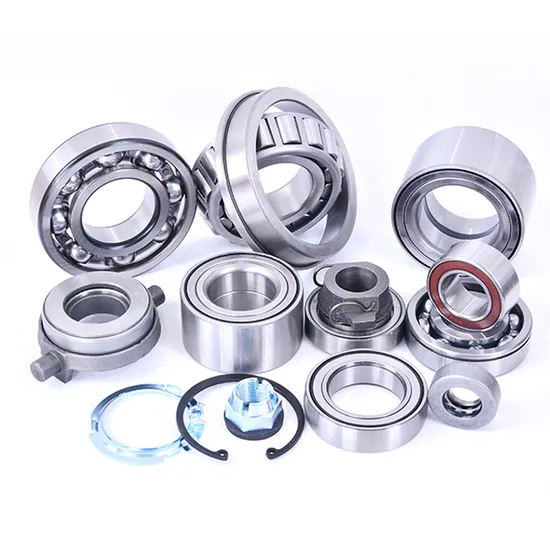
NSK NTN KOYO TIMKEN Deep Groove & Taper Roller Bearings – High Precision, Long Life

Deep Groove Ball Bearing
X&S 16020 16018 16015 Thin Wall Deep Groove Ball Bearing for Agricultural Machinery
Deep Groove Ball Bearing