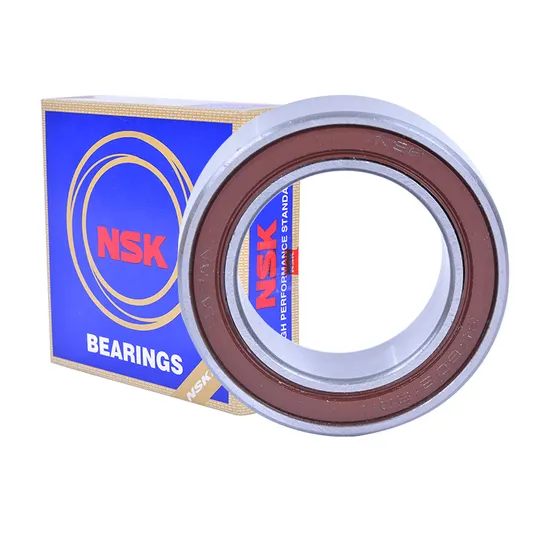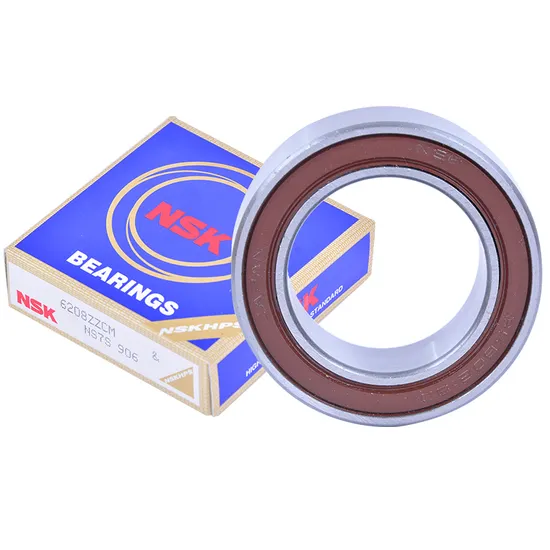
Angular Contact Ball Bearing

X&S 5209 5210 5211 5212 Double Row Angular Contact Ball Bearings — unseparated structure handles combined radial and axial loads simultaneously.
Authorized Multi-Brand Sourcing — Procure mixed-brand requirements in a single consolidated shipment with full cross-reference alignment covering internal design and clearance classes.
| Parameter | Value |
|---|---|
| Designation | 5209 5210 5211 5212 |
| Bearing Type | Double Row Angular Contact Ball Bearing |
| Separated | Unseparated |
| Rows Number | Double |
| Load Direction | Radial & Axial Load |
| Vibration | Z1V1, Z2V2, Z3V3, Z4V4 |
| Lubrication | Grease or Oil |
| Origin | China |
| HS Code | 8482109000 |
Note: Alternative model references such as 3212m or 3213m contain an unverified lowercase ‘m’ suffix; uppercase ‘M’ typically denotes a machined brass cage, but lowercase variants require manufacturer catalog confirmation before cross-referencing.
| Industry | Typical Applications |
|---|---|
| Precision Instruments | Optical measurement device rotary stages, coordinate measuring machine spindles |
| Automotive Parts | Steering column intermediate shafts, electric power steering motor assemblies |
| General Machinery | Small industrial gearbox input shafts, textile machine tensioning rollers |
Selecting the correct acoustic and dynamic grade prevents resonance-induced cage fatigue in sensitive equipment.
In high-speed precision assemblies, ignoring vibration classifications often leads to microscopic harmonic oscillations. These oscillations accelerate lubricant degradation and cause premature surface distress on the raceways [NEED_CITE: rolling bearing failure mode classification per ISO 15243]. Sourcing an X&S 5209 5210 5211 5212 double row angular contact ball bearing without verifying the Z-grade against the equipment’s acoustic threshold frequently results in thermal binding or early structural failure.
The unseparated double row configuration provides simultaneous radial and axial load capacity within a compact axial footprint. This design is critical for optical measurement devices and steering assemblies where space constraints preclude using paired single-row bearings. An X&S 5209 5210 5211 5212 double row angular contact ball bearing delivers the necessary rigidity for these applications while maintaining the rotational accuracy required for精密 instrumentation.
High-speed operation in precision instruments generates significant internal friction, making the choice between grease and oil lubrication critical. Grease offers simplicity and lower maintenance but has strict speed limits, whereas oil circulation manages heat dissipation effectively at extreme RPMs. Furthermore, thermal expansion during continuous operation alters internal clearance; selecting a clearance class that accommodates the specific operating temperature gradient prevents the rings from seizing under thermal growth [NEED_CITE: thermal expansion effects on bearing internal clearance per ISO 281].
The availability of Z1V1 through Z4V4 vibration grades allows engineers to match the bearing’s acoustic output to the noise-sensitivity of the host equipment. While Z1V1 suffices for general machinery, Z4V4 is mandatory for ultra-quiet precision spindles where minimal vibration ensures measurement integrity. Additionally, ensuring the internal clearance aligns with the shaft and housing tolerances prevents excessive preload, which would otherwise spike operating temperatures and drastically reduce the L10 life.
Relying solely on the base designation while ignoring internal design variations leads to catastrophic field failures. A mismatched clearance class or incorrect cage material causes rapid thermal runaway and cage fragmentation. According to ISO 15243, a significant share of premature failures stems from these subtle specification mismatches rather than metallurgical defects [NEED_CITE: bearing damage analysis and failure modes per ISO 15243]. This results in unplanned downtime, voided equipment warranties, and costly secondary damage to the surrounding assembly.
We verify cross-references against clearance, cage material, and precision suffixes, not just the base number. For the 5209-5212 series, we specifically check vibration grades to ensure acoustic compatibility with your precision instruments. Our batch traceability allows you to verify the exact production lot via official brand applications. We provide application-based selection reviews that factor in your specific speed and temperature conditions to prevent thermal binding. Every shipment includes dimensional and running accuracy inspection reports to guarantee the stated precision class.
To ensure optimal performance, provide your specific radial and axial load profiles, operating speeds, and ambient temperature ranges. Our engineering team will perform an L10 life calculation and verify the required vibration grade and clearance class for your application. If you are replacing an existing component, share the OEM equipment number or the exact suffix string from the nameplate to guarantee a flawless cross-reference alignment.
Q: How do I select the correct vibration grade for my precision instrument?
A: The Z1V1 to Z4V4 scale indicates decreasing vibration and noise levels. For ultra-quiet applications like optical measurement stages or medical devices, Z3V3 or Z4V4 is mandatory to prevent harmonic interference. General machinery typically operates efficiently with Z1V1 or Z2V2. Always match the grade to the acoustic sensitivity of your specific equipment.
Q: What cross-reference checks are needed beyond the base designation?
A: Matching the base number is insufficient. You must verify the internal clearance class, cage material, and precision grade. For example, installing a standard clearance bearing in a high-speed application requiring C3 clearance will cause thermal binding. We review all suffixes to ensure the replacement matches the exact dynamic and thermal requirements of your assembly.
Q: How does thermal expansion affect clearance selection in high-speed applications?
A: High rotational speeds generate internal heat, causing the inner ring to expand more than the outer ring. This reduces the internal operating clearance. If a standard CN clearance is used where C3 is required, the bearing may seize due to thermal expansion. Selecting the correct initial clearance compensates for this thermal growth, ensuring stable operation.
Q: How can I verify the authenticity of the delivered bearings?
A: We provide full batch and lot traceability with every shipment. You can verify the authenticity by scanning the QR codes on the packaging using the manufacturer’s official mobile application. This confirms the production facility, date, and exact specifications, protecting your operation from counterfeits with soft inner rings or cloned markings.
Our engineers will respond within 12 hours with a tailored solution.
Request Quote| Bearing Type | Angular Contact Ball Bearing |
| Brand | SKF |
| Quality Standard | ISO 9001 / TS 16949 |
| Precision Grade | P0 / P5 / P6 (custom) |
| Material | Chrome Steel / Stainless |
| Cage Material | Steel / Brass / Polyamide |
| Lubrication | Grease / Oil (specify) |
| Operating Temp. | -40°C to +200°C |
| Min. Order Qty | 1 pc (samples available) |
| Prototype Lead Time | 7 Working Days |
| Load Capacity | Contact for C0/Cr values |
| Speed Rating | Contact for ndm limit |
| Vibration Level | Z1 / Z2 / Z3 (custom) |
| Noise Level | V1 / V2 / V3 (custom) |
| Fatigue Life | L10h per ISO 281 |
| Sealing Options | Open / Z / 2Z / RS / 2RS |
Our engineering team can modify bearing dimensions, materials, seals, and clearances to meet your specific operating requirements. Submit your drawing or spec sheet for a tailored proposal.
Main shaft bearings, gearbox bearings, and generator bearings for onshore and offshore wind turbines.
Heavy-duty bearings for crushers, conveyors, and rotary equipment in extreme dust and shock-load environments.
High-temperature bearings for rolling mills, continuous casting, and furnace applications.
Wheel hub bearings, transmission bearings, and e-motor bearings for passenger and commercial vehicles.
Axle box bearings, traction motor bearings, and gearbox bearings meeting EN/UIC railway standards.
High-precision spindle bearings, angular contact bearings, and super-precision bearings for CNC and robotics.
Our engineers analyze your operating conditions -- load, speed, temperature, environment -- and select or design the optimal bearing solution to maximize service life and reduce total cost of ownership.
Need non-standard dimensions, special materials, or modified clearances? We can modify standard SKF bearings or manufacture fully custom solutions with a 7-day prototype turnaround.
When bearings fail prematurely, our team conducts root-cause analysis using advanced diagnostic tools to identify the failure mode and recommend corrective action.
We deploy vibration monitoring, thermal imaging, and oil analysis programs that detect bearing deterioration early -- reducing unplanned downtime by up to 40%.
Proper installation is critical to bearing performance. Our certified technicians provide on-site installation support, alignment verification, and operator training worldwide.
From initial selection through end-of-life, our dedicated account managers provide scheduled maintenance plans, re-lubrication programs, and replacement forecasting for enterprise clients.
NDA protected · Free samples for orders > $50K · Reply within 12 hours