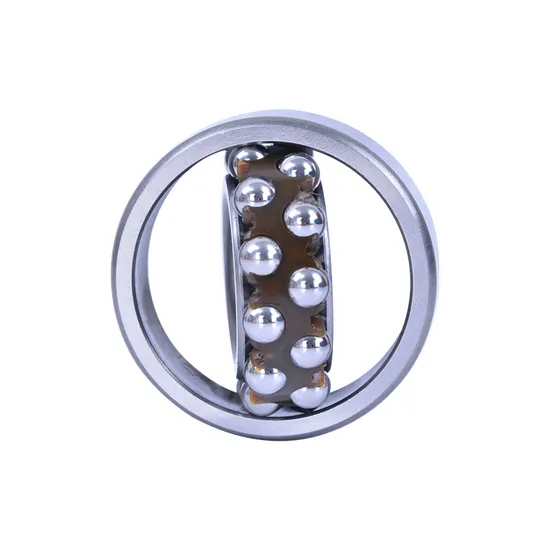
Self-Aligning Ball Bearing
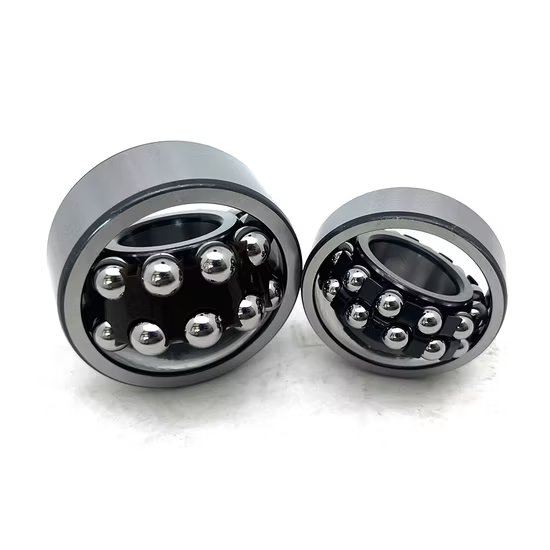
X&S 2310 2310TN 2310K 2310KTN 2310-2RS Self-Aligning Ball Bearing — integrates double contact seals for maintenance-free operation and 1:12 tapered bore variants for secure adapter sleeve mounting.
Cross-reference alignment verified — We match base designations with exact clearance and cage suffixes to prevent thermal binding in motor applications.
| Parameter | Value |
|---|---|
| Designation | 2310 2310TN 2310K 2310KTN 2310-2RS |
| Bearing Type | Self-Aligning Ball Bearing |
| Bore Type | Cylindrical and Tapered (1:12) |
| Cage Material | Steel Cage, Brass Cage, Nylon Cage |
| Clearance Class | C2, C0 (CN), C3, C4, C5 |
| Hardness | HRC58-62 [NEED_CITE:] |
| Limiting Speed | 5600-18000 r/Min |
| Lubrication | Grease or Oil |
| Precision Class | Standard |
| Seal or Shield Type | Open and Double Contact Seal |
| Vibration Level | V1, V2, V3, V4 |
| Origin | Shandong, China |
Note: The TN suffix is an unverified designation requiring manufacturer catalog confirmation, likely indicating a polyamide cage.
| Industry | Typical Applications |
|---|---|
| Electric Motors | Rotor shafts experiencing slight misalignment |
| Automotive | Alternator and cooling fan drive assemblies |
| Tractor | PTO shaft supports and steering linkages |
| Construction Machinery | Vibratory screen drive mechanisms |
Misalignment compensation is useless if the internal clearance ignores thermal expansion.
During my years handling aftermarket support in Ningbo, I saw countless electric motor plants suffer early fatigue because they treated self-aligning capabilities as a cure-all. Procurement teams often substitute standard deep groove ball bearings to cut costs, only to watch the inner ring seize and burn out the stator windings under high heat. Even when the correct bearing type is selected, ignoring the clearance suffix leads to catastrophic thermal binding [NEED_CITE: rolling bearing failure mode classification per ISO 15243]. The X&S 2310 self-aligning ball bearing is engineered to handle shaft deflection, but it demands precise suffix matching to survive the actual operating temperature.
Selecting the right X&S 2310 self-aligning ball bearing requires looking beyond the base number to evaluate the specific operational environment. Electric motors demand careful attention to thermal growth, making C3 or C4 clearance essential to prevent internal preload buildup as the rotor heats up. For construction machinery exposed to heavy dust and debris, the 2RS double contact seal variant provides necessary contamination defense without requiring complex external sealing arrangements. Our technical review process ensures that the chosen cage material and clearance class align perfectly with your equipment’s specific speed and load profile.
Motor shafts operate under combined radial loads and continuous thermal cycling, which drastically alters internal geometry. If a standard CN clearance is installed where C3 was required, the thermal expansion of the shaft eliminates the internal gap, causing the rolling elements to skid and generate excessive friction heat. In agricultural and construction environments, the challenge shifts to contamination ingress. Open bearings require rigorous relubrication schedules to flush out abrasive particles, whereas sealed variants retain factory grease but introduce slight frictional drag. Balancing these thermal and environmental factors dictates whether an open, sealed, or tapered bore configuration will deliver acceptable service life [NEED_CITE: bearing internal clearance and thermal expansion dynamics].
The base designation merely identifies the physical envelope; the suffixes define the operational boundaries. The K variant features a 1:12 tapered bore, designed to be mounted with an adapter sleeve to achieve precise interference fits on standard shafting without requiring machined shoulders. Cage selection is equally critical: steel cages handle moderate speeds and high temperatures, brass cages offer superior durability under heavy vibration, and nylon cages reduce weight and noise at higher rotational speeds. The 2RS suffix indicates molded rubber seals that maintain lubrication integrity in dirty environments, directly influencing the maintenance intervals of the host equipment.
Overlooking a single suffix character during procurement triggers a cascade of operational failures. Installing a standard clearance bearing in a high-temperature motor results in rapid cage degradation and eventual shaft seizure, leading to unplanned downtime and destroyed windings. Conversely, using an open bearing in a dusty tractor assembly forces maintenance crews into constant relubrication cycles, inflating operational expenses. These misapplications frequently result in warranty voidance, as manufacturers reject claims stemming from incorrect installation or environmental mismatch [NEED_CITE: premature bearing failure causes per ISO 15243].
Our distribution network provides authorized coverage across major international brands, allowing mixed-brand orders to be fulfilled through a single supply chain. We execute cross-brand interchanges by matching clearance, cage material, and precision suffixes, not just the base designation. Every batch of bearings is supplied with full traceability to the manufacturer, verified via QR codes through official brand applications to eliminate the risk of counterfeit parts with soft inner rings. Our technical team conducts application-based selection reviews to confirm that the chosen variant can withstand your specific load, speed, and temperature conditions.
To ensure accurate selection and cross-reference verification, please provide your specific radial and axial load values, operating speeds, and expected thermal growth parameters. Sharing the OEM equipment number allows our engineering team to validate the required clearance and cage suffixes against the original design intent. If your application involves extreme contamination or unusual mounting constraints, detail the environmental conditions so we can recommend the optimal sealing and bore configuration. This technical data enables us to perform a comprehensive L10 life calculation and confirm the suitability of the proposed variant.
Q: Why must clearance and cage suffixes align during cross-referencing?
A: Matching only the base number ignores critical internal geometry. A standard clearance bearing will bind under motor heat, while the wrong cage material may fail under vibration. We verify all suffixes to ensure the replacement handles your specific thermal and mechanical loads without premature fatigue.
Q: How do standard precision and C3/C4 clearances interact in electric motors?
A: Standard precision ensures the dimensional accuracy required for smooth rotation, while C3 or C4 clearance provides the necessary internal gap to accommodate shaft expansion as the motor heats up. Using standard clearance in these conditions eliminates the gap, causing thermal binding and rapid failure.
Q: What are the selection boundaries for steel, brass, and nylon cages?
A: Steel cages suit general-purpose applications with moderate speeds. Brass cages offer superior durability and vibration resistance for heavy machinery. Nylon cages reduce friction and noise, making them ideal for high-speed electric motors, provided the operating temperature remains within the polymer’s thermal limits.
Q: How does the 2RS seal affect maintenance compared to open designs?
A: The 2RS double contact seal retains factory lubrication and blocks dust ingress, making it ideal for dirty environments where relubrication is difficult. Open bearings require regular grease purging to flush out contaminants, demanding stricter maintenance schedules but allowing for higher speed capabilities.
Q: What is the correct mounting procedure for the K tapered bore variant?
A: The K tapered bore requires an adapter sleeve and locknut. Installers must measure the drive-up distance or check the residual internal clearance during mounting to ensure a secure interference fit without eliminating the operational clearance needed for thermal expansion.
Our engineers will respond within 12 hours with a tailored solution.
Request Quote| Bearing Type | Self-Aligning Ball Bearing |
| Brand | SKF |
| Quality Standard | ISO 9001 / TS 16949 |
| Precision Grade | P0 / P5 / P6 (custom) |
| Material | Chrome Steel / Stainless |
| Cage Material | Steel / Brass / Polyamide |
| Lubrication | Grease / Oil (specify) |
| Operating Temp. | -40°C to +200°C |
| Min. Order Qty | 1 pc (samples available) |
| Prototype Lead Time | 7 Working Days |
| Load Capacity | Contact for C0/Cr values |
| Speed Rating | Contact for ndm limit |
| Vibration Level | Z1 / Z2 / Z3 (custom) |
| Noise Level | V1 / V2 / V3 (custom) |
| Fatigue Life | L10h per ISO 281 |
| Sealing Options | Open / Z / 2Z / RS / 2RS |
Our engineering team can modify bearing dimensions, materials, seals, and clearances to meet your specific operating requirements. Submit your drawing or spec sheet for a tailored proposal.
Main shaft bearings, gearbox bearings, and generator bearings for onshore and offshore wind turbines.
Heavy-duty bearings for crushers, conveyors, and rotary equipment in extreme dust and shock-load environments.
High-temperature bearings for rolling mills, continuous casting, and furnace applications.
Wheel hub bearings, transmission bearings, and e-motor bearings for passenger and commercial vehicles.
Axle box bearings, traction motor bearings, and gearbox bearings meeting EN/UIC railway standards.
High-precision spindle bearings, angular contact bearings, and super-precision bearings for CNC and robotics.
Our engineers analyze your operating conditions -- load, speed, temperature, environment -- and select or design the optimal bearing solution to maximize service life and reduce total cost of ownership.
Need non-standard dimensions, special materials, or modified clearances? We can modify standard SKF bearings or manufacture fully custom solutions with a 7-day prototype turnaround.
When bearings fail prematurely, our team conducts root-cause analysis using advanced diagnostic tools to identify the failure mode and recommend corrective action.
We deploy vibration monitoring, thermal imaging, and oil analysis programs that detect bearing deterioration early -- reducing unplanned downtime by up to 40%.
Proper installation is critical to bearing performance. Our certified technicians provide on-site installation support, alignment verification, and operator training worldwide.
From initial selection through end-of-life, our dedicated account managers provide scheduled maintenance plans, re-lubrication programs, and replacement forecasting for enterprise clients.
NDA protected · Free samples for orders > $50K · Reply within 12 hours