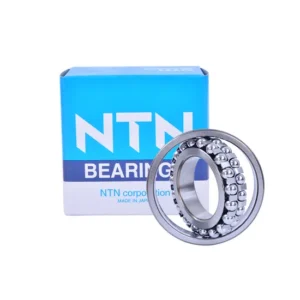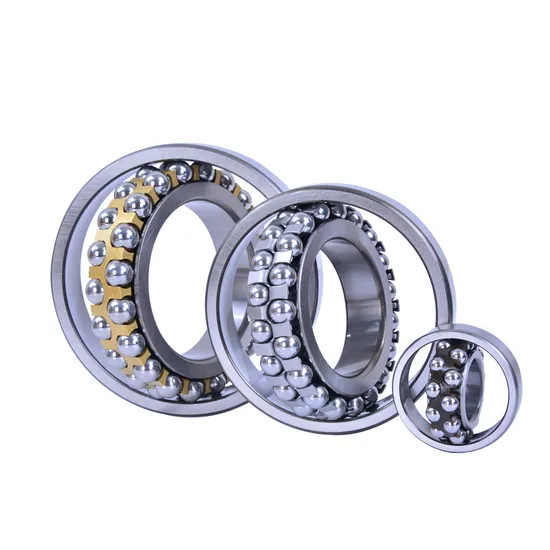
Self-Aligning Ball Bearing
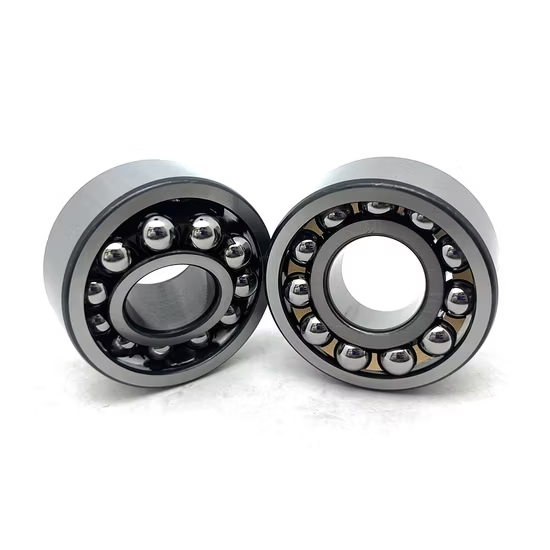
X&S 2308 2308TN 2308K 2308KTN 2308-2RS 2308M Self-Aligning Ball Bearing features a 1:12 tapered bore for secure adapter sleeve mounting and a machined brass cage to withstand high vibration in agricultural machinery.
Full Batch Traceability — Every X&S 2308 self-aligning ball bearing ships with verifiable lot documentation linking directly to the manufacturer’s production records.
| Parameter | Value |
|---|---|
| Designation | 2308 2308TN 2308K 2308KTN 2308-2RS 2308M |
| Bearing Type | Self-Aligning Ball Bearing |
| Hardness | HRC58-62 [NEED_CITE: standard bearing steel hardness range] |
| Lubrication | Grease or Oil |
| Cage Material | Steel Cage, Brass Cage, Nylon Cage |
| Limiting Speed | 5600-18000 r/Min |
| Vibration Level | V1, V2, V3, V4 |
| Clearance Class | C2, C0, C3, C4, C5 |
| Bore Type | Cylindrical and 1:12 Tapered (K suffix) |
| Origin | Shandong, China |
Note: TN and 2RS suffixes require manufacturer catalog confirmation for exact sealing and cage design specifications.
| Industry | Typical Applications |
|---|---|
| Agricultural Machinery | Tractor steering columns, combine harvester threshing drums, planter row units |
| Construction Machinery | Excavator swing mechanisms, loader articulation joints, compactor vibration isolators |
| Automotive | Steering gear assemblies, suspension pivot points, drivetrain support shafts |
Thermal binding from incorrect clearance selection causes more field failures than actual overloading.
I have seen the aftermath in Latin American mining and farming operations where a standard clearance was forced into a high-temperature environment. The inner ring annealed and turned blue before seizing completely on the shaft. When sourcing an X&S 2308 self-aligning ball bearing, overlooking the suffix for thermal expansion compensation turns a routine replacement into a catastrophic downtime event [NEED_CITE: rolling bearing failure mode classification per ISO 15243]. Cross-reference errors that match the base number but ignore the cage material or bore type routinely cause premature cage failure under heavy misalignment.
Selecting the correct variant ensures the component survives the specific misalignment and load profile of the equipment. The X&S 2308 self-aligning ball bearing series offers distinct configurations to handle these varying demands. A tapered bore option allows for precise interference fit adjustments on adapter sleeves, which is critical for maintaining the correct internal geometry on vibrating shafts. We review the exact application parameters to ensure the chosen suffix aligns perfectly with the mechanical realities of the installation.
Agricultural and construction environments introduce severe contamination risks that dictate the sealing and lubrication strategy. Dust and moisture ingress rapidly degrade standard grease, making the choice between open, shielded, or contact-sealed variants a primary defense against premature wear. Operating temperatures fluctuate wildly, requiring a clearance class that prevents internal p*, heavy shock loads from uneven terrain demand a cage material that resists deformation while maintaining adequate lubrication film thickness [NEED_CITE: bearing life calculation under contaminated conditions per ISO 281].
The internal geometry and material choices define the operational boundaries of these components. The machined brass cage option provides superior resistance to vibration and shock loads compared to pressed steel alternatives, making it ideal for heavy construction equipment. Conversely, polyamide cages offer lower friction and quieter operation for automotive or precision agricultural steering applications. The 1:12 tapered bore design facilitates secure mounting on adapter sleeves, allowing technicians to dial in the exact radial internal clearance during installation. Selecting the appropriate vibration grade ensures the component meets the noise and smoothness requirements of the specific drivetrain assembly.
Installing a component with the wrong internal geometry or cage material leads directly to unplanned downtime and secondary equipment damage. A standard clearance unit operating in a high-heat environment will quickly lose its internal play, resulting in catastrophic thermal seizure that can score the shaft and destroy the housing. Using a pressed steel cage in a high-vibration application often leads to rapid cage fracture, scattering debris throughout the gearbox. These failures void equipment warranties and force expensive emergency repairs far beyond the cost of the correctly specified part [NEED_CITE: secondary damage from bearing seizure per ISO 15243].
Mixed-brand requirements are handled through our authorized coverage, eliminating the need to coordinate with multiple suppliers for a single maintenance shutdown. We match cross-references based on exact clearance, cage material, and bore type, preventing the thermal binding issues caused by base-number-only substitutions. Every batch includes full traceability to the manufacturer, verified through official brand apps to eliminate the risk of counterfeit parts with soft inner rings. Our technical selection review covers the specific load, speed, and temperature conditions of your agricultural machinery to ensure the selected variant performs reliably in the field.
To facilitate an accurate technical review, please provide the specific radial and axial loads, operating speeds, and ambient temperature ranges of your application. Supplying the OEM equipment number or the exact housing dimensions allows our engineering team to perform a precise cross-reference and L10 life calculation. Detailing the environmental exposure, such as heavy dust or moisture, helps us determine the optimal sealing and clearance configuration for your machinery.
Q: Why must clearance and cage suffixes be matched exactly during cross-referencing?
A: Matching only the base designation ignores critical internal geometry differences. A standard clearance unit installed in a high-temperature agricultural application will thermally bind and seize, while an incorrect cage material may fracture under heavy vibration. Exact suffix matching ensures the component can handle the specific thermal expansion and mechanical shock profiles of your equipment.
Q: How do I verify the authenticity and batch traceability of these units?
A: Every unit ships with verifiable lot documentation and a traceable batch number linked to the manufacturer. You can scan the packaging using the official brand application to instantly confirm authenticity. This process effectively eliminates the risk of installing counterfeit parts with cloned QR codes and substandard metallurgy.
Q: What are the selection boundaries between steel, nylon, and machined brass cages?
A: Pressed steel cages are cost-effective for standard loads and moderate speeds. Nylon cages offer lower friction, reduced noise, and better performance in marginal lubrication conditions. Machined brass cages provide the highest resistance to shock loads, severe vibration, and rapid acceleration, making them the mandatory choice for heavy construction and high-vibration agricultural drivetrains.
Q: When should a tapered bore be selected over a standard cylindrical bore?
A: The tapered bore option is selected when the component must be mounted on an adapter sleeve or a tapered shaft seat. This configuration allows the installer to precisely adjust the radial internal clearance by controlling the drive-up distance during mounting, which is essential for maintaining optimal performance on shafts that experience significant thermal expansion or heavy bending loads.
Q: What are the recommended lubrication practices for agricultural machinery applications?
A: Open variants require a regular relubrication schedule using a grease compatible with the operating temperature and contamination level, ensuring old grease is purged to remove trapped debris. Sealed variants are pre-lubricated for life and must not be relubricated or heated excessively during installation, as this will compromise the sealing lips and allow agricultural dust to enter the raceway.
Our engineers will respond within 12 hours with a tailored solution.
Request Quote| Bearing Type | Self-Aligning Ball Bearing |
| Brand | SKF |
| Quality Standard | ISO 9001 / TS 16949 |
| Precision Grade | P0 / P5 / P6 (custom) |
| Material | Chrome Steel / Stainless |
| Cage Material | Steel / Brass / Polyamide |
| Lubrication | Grease / Oil (specify) |
| Operating Temp. | -40°C to +200°C |
| Min. Order Qty | 1 pc (samples available) |
| Prototype Lead Time | 7 Working Days |
| Load Capacity | Contact for C0/Cr values |
| Speed Rating | Contact for ndm limit |
| Vibration Level | Z1 / Z2 / Z3 (custom) |
| Noise Level | V1 / V2 / V3 (custom) |
| Fatigue Life | L10h per ISO 281 |
| Sealing Options | Open / Z / 2Z / RS / 2RS |
Our engineering team can modify bearing dimensions, materials, seals, and clearances to meet your specific operating requirements. Submit your drawing or spec sheet for a tailored proposal.
Main shaft bearings, gearbox bearings, and generator bearings for onshore and offshore wind turbines.
Heavy-duty bearings for crushers, conveyors, and rotary equipment in extreme dust and shock-load environments.
High-temperature bearings for rolling mills, continuous casting, and furnace applications.
Wheel hub bearings, transmission bearings, and e-motor bearings for passenger and commercial vehicles.
Axle box bearings, traction motor bearings, and gearbox bearings meeting EN/UIC railway standards.
High-precision spindle bearings, angular contact bearings, and super-precision bearings for CNC and robotics.
Our engineers analyze your operating conditions -- load, speed, temperature, environment -- and select or design the optimal bearing solution to maximize service life and reduce total cost of ownership.
Need non-standard dimensions, special materials, or modified clearances? We can modify standard SKF bearings or manufacture fully custom solutions with a 7-day prototype turnaround.
When bearings fail prematurely, our team conducts root-cause analysis using advanced diagnostic tools to identify the failure mode and recommend corrective action.
We deploy vibration monitoring, thermal imaging, and oil analysis programs that detect bearing deterioration early -- reducing unplanned downtime by up to 40%.
Proper installation is critical to bearing performance. Our certified technicians provide on-site installation support, alignment verification, and operator training worldwide.
From initial selection through end-of-life, our dedicated account managers provide scheduled maintenance plans, re-lubrication programs, and replacement forecasting for enterprise clients.
NDA protected · Free samples for orders > $50K · Reply within 12 hours