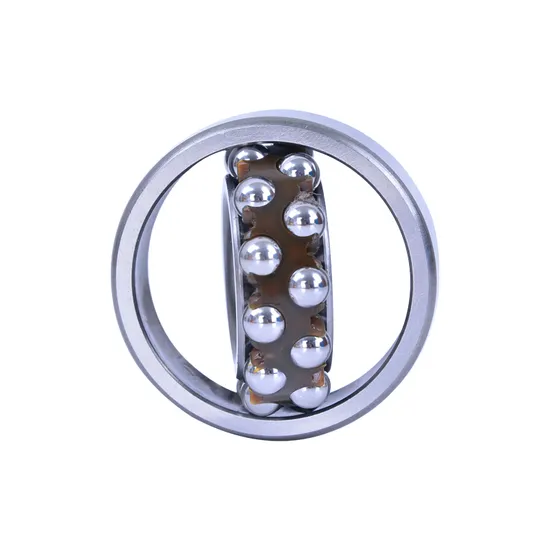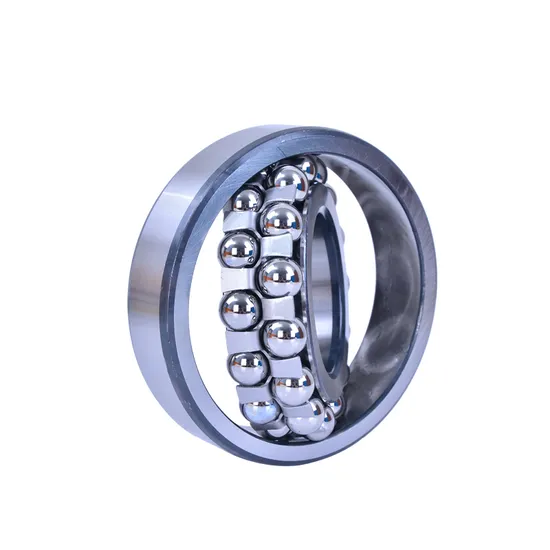

Self-Aligning Ball Bearing
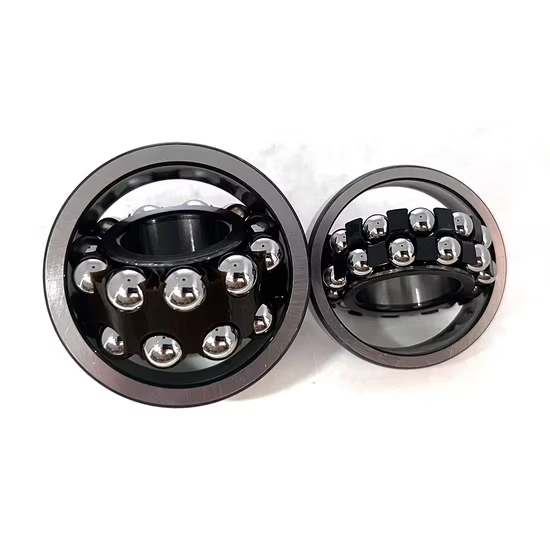
X&S 2301 2301TN 2301-2RS 2302 2302TN 2302-2RS Self-Aligning Ball Bearing C2-C5 — featuring double contact seals for maintenance-free contamination protection and adjustable clearance to manage thermal expansion.
Cross-reference triplet alignment — verifying base number, cage material, and clearance class simultaneously prevents field binding in X&S 2301 2302 self-aligning ball bearing applications.
| Parameter | Value |
|---|---|
| Designation | 2301 2301TN 2301-2RS 2302 2302TN 2302-2RS |
| Bearing Type | Self-Aligning Ball Bearing |
| Cage Material | Steel Cage, Brass Cage, Nylon Cage |
| Seal or Shield Type | Open, 2RS (Double contact seals) |
| Clearance Class | C2, C0, C3, C4, C5 |
| Limiting Speed | 5600-18000 r/min |
| Hardness | HRC58-62 [NEED_CITE: standard bearing steel hardness range] |
| Lubrication | Grease or Oil |
| Vibration Level | V1, V2, V3, V4 |
| Origin | Shandong, China |
| Industry | Typical Applications |
|---|---|
| Automotive | Steering column support mechanisms and pedal assembly pivots |
| Agricultural Machinery | Tractor front axle pivot joints and steering linkages |
| Construction Machinery | Vibratory roller articulation points and conveyor idler frames |
Matching the base number without verifying the cage and clearance suffixes guarantees thermal binding under load.
Running现场 in the Shandong Peninsula for years, I have witnessed countless situations where a standard clearance bearing was installed in a high-temperature motor, leading to rapid seizure. Cross-reference errors frequently occur when procurement teams focus solely on the base designation while ignoring critical suffixes. A nylon cage might melt in an environment requiring brass, or a standard clearance might eliminate the necessary thermal expansion gap. These oversights directly cause catastrophic cage failure and unplanned downtime [NEED_CITE: rolling bearing failure mode classification per ISO 15243].
Selecting the correct X&S 2301 2302 self-aligning ball bearing requires looking past the basic part number to evaluate the internal geometry against the actual working environment. Our technical review process ensures that the selected cage material and internal clearance perfectly match your specific thermal and mechanical conditions. We cross-reference the exact suffix requirements to prevent the mismatched internal play that typically leads to premature operational failure.
Self-aligning designs accommodate shaft deflections, but the internal clearance must still account for thermal growth. When operating temperatures rise, the inner ring expands, reducing internal play. If a standard clearance is used where a C3 or C4 is required, the rolling elements will bind. Furthermore, lubrication choices dictate maintenance intervals; grease-lubricated sealed variants prevent contamination ingress but cannot be relubricated, whereas open designs require strict external lubrication schedules to manage friction heat [NEED_CITE: bearing lubrication and thermal management principles].
The cage material dictates the speed and temperature boundaries of the bearing. Steel cages offer high mechanical strength for heavy loads, brass cages provide superior stability and heat dissipation at higher speeds, and nylon cages reduce weight and operational noise in moderate conditions. Regarding sealing, the 2RS configuration utilizes double contact seals to block dust and moisture, making it ideal for harsh agricultural or construction environments, though this contact friction slightly lowers the limiting speed compared to open variants. Note: The TN suffix is an unverified designation in some contexts and requires manufacturer catalog confirmation to ensure it denotes the correct polyamide cage specification for this specific series.
Substituting a bearing based only on dimensional equivalence while ignoring internal design variations leads to severe operational penalties. A mismatched seal type can allow abrasive dust to enter the raceway, causing rapid wear. Incorrect clearance selection results in excessive preload during thermal expansion, accelerating fatigue. According to ISO 281 fatigue life calculation frameworks, these uncontrolled internal stresses drastically reduce the theoretical service life, culminating in catastrophic damage to the surrounding shaft and housing assemblies [NEED_CITE: bearing life calculation standards per ISO 281].
Sourcing mixed-brand requirements through a single authorized channel eliminates the coordination delays typical of fragmented supply chains. We prioritize batch traceability for every X&S 2301 2302 self-aligning ball bearing, ensuring you receive genuine products rather than counterfeits with soft inner rings. Our cross-reference alignment strictly matches the clearance class and cage material, not just the base number. We also provide application-based selection reviews to validate load, speed, and temperature parameters before finalizing the order.
To facilitate an accurate technical review and L10 life calculation, please provide the specific radial and axial loads, operating speeds, and expected temperature ranges for your application. If you are replacing an existing component, sharing the OEM equipment number allows our engineering team to perform a precise cross-reference check. Detailing the environmental exposure, such as dust or moisture levels, helps us confirm whether an open or 2RS sealed configuration is most appropriate.
Q: How do I determine the correct clearance class for high-temperature applications?
A: Operating temperature directly affects internal play. As the inner ring heats up and expands, the clearance decreases. For applications with significant thermal gradients or high ambient heat, a C3 or C4 clearance is typically required to prevent the rolling elements from binding and generating excessive friction.
Q: What are the operational differences between steel, brass, and nylon cages?
A: Steel cages provide high mechanical strength for heavy-load applications. Brass cages offer excellent stability, durability, and heat dissipation for higher-speed operations. Nylon cages are lighter, reduce operational noise, and perform well in moderate temperature environments, but they have lower thermal limits than metallic alternatives.
Q: How can I verify the authenticity of the bearings upon delivery?
A: Every genuine batch includes traceability documentation. You can scan the QR codes on the packaging using the official brand application to verify the manufacturing origin and batch details. We also provide dimensional inspection reports to confirm the physical specifications match the ordered suffixes.
Q: Why do cross-reference errors in sealing suffixes cause field failures?
A: Selecting an open bearing when a 2RS sealed variant is required allows abrasive contaminants to enter the raceway, causing rapid wear. Conversely, using a sealed bearing in a high-speed, high-temperature application where an open, oil-lubricated design is needed will cause the seal lip to overheat and fail due to friction.
Our engineers will respond within 12 hours with a tailored solution.
Request Quote| Bearing Type | Self-Aligning Ball Bearing |
| Brand | SKF |
| Quality Standard | ISO 9001 / TS 16949 |
| Precision Grade | P0 / P5 / P6 (custom) |
| Material | Chrome Steel / Stainless |
| Cage Material | Steel / Brass / Polyamide |
| Lubrication | Grease / Oil (specify) |
| Operating Temp. | -40°C to +200°C |
| Min. Order Qty | 1 pc (samples available) |
| Prototype Lead Time | 7 Working Days |
| Load Capacity | Contact for C0/Cr values |
| Speed Rating | Contact for ndm limit |
| Vibration Level | Z1 / Z2 / Z3 (custom) |
| Noise Level | V1 / V2 / V3 (custom) |
| Fatigue Life | L10h per ISO 281 |
| Sealing Options | Open / Z / 2Z / RS / 2RS |
Our engineering team can modify bearing dimensions, materials, seals, and clearances to meet your specific operating requirements. Submit your drawing or spec sheet for a tailored proposal.
Main shaft bearings, gearbox bearings, and generator bearings for onshore and offshore wind turbines.
Heavy-duty bearings for crushers, conveyors, and rotary equipment in extreme dust and shock-load environments.
High-temperature bearings for rolling mills, continuous casting, and furnace applications.
Wheel hub bearings, transmission bearings, and e-motor bearings for passenger and commercial vehicles.
Axle box bearings, traction motor bearings, and gearbox bearings meeting EN/UIC railway standards.
High-precision spindle bearings, angular contact bearings, and super-precision bearings for CNC and robotics.
Our engineers analyze your operating conditions -- load, speed, temperature, environment -- and select or design the optimal bearing solution to maximize service life and reduce total cost of ownership.
Need non-standard dimensions, special materials, or modified clearances? We can modify standard SKF bearings or manufacture fully custom solutions with a 7-day prototype turnaround.
When bearings fail prematurely, our team conducts root-cause analysis using advanced diagnostic tools to identify the failure mode and recommend corrective action.
We deploy vibration monitoring, thermal imaging, and oil analysis programs that detect bearing deterioration early -- reducing unplanned downtime by up to 40%.
Proper installation is critical to bearing performance. Our certified technicians provide on-site installation support, alignment verification, and operator training worldwide.
From initial selection through end-of-life, our dedicated account managers provide scheduled maintenance plans, re-lubrication programs, and replacement forecasting for enterprise clients.
NDA protected · Free samples for orders > $50K · Reply within 12 hours