

ISO 9001 Certified
TS 16949
Genuine SKF
Need Technical Advice?
Reply within 12 hours · 15+ certified engineers on call
Self-Aligning Ball Bearing
X&S 2217 2216 2215 2214 2213 Self-Aligning Ball Bearing for Auto Parts [WARN] draft identifier mismatch
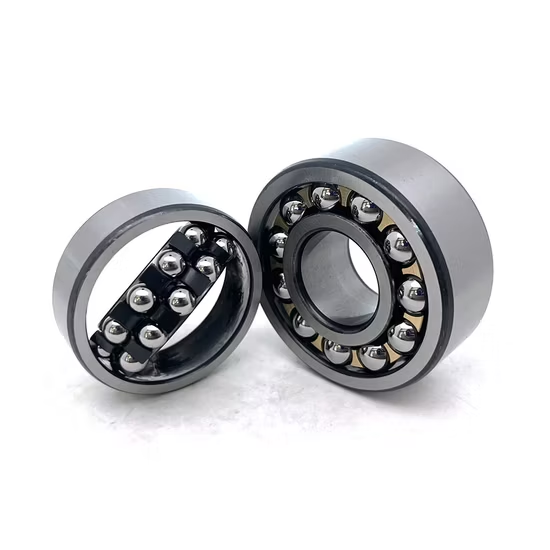
X&S 2217 2216 2215 2214 2213 Self-Aligning Ball Bearings — wide series design effectively compensates for shaft misalignment in automotive and tractor applications.
- Hardened to HRC58-62 for reliable performance under dynamic loads.
- Every shipment includes full batch traceability and material test reports for complete procurement confidence.
7
Day Prototype
vs. 8-12 wks standard
50+
Countries Served
Global logistics network
12h
Quote Response
Expert engineers on call
Typical Applications
Wind Power
Mining
Steel & Metallurgy
Automotive / EV
Rail Transit
Precision Machinery
Genuine SKF Bearings
NDA Protected
Free Sample for Orders > $50K
Global Shipping
Product Details
Unified Multi-Brand Fulfillment — Procure mixed-brand assemblies in a single consolidated shipment, eliminating the friction of coordinating multiple vendors for your X&S 2217 2216 2215 2214 2213 self-aligning ball bearing requirements.
Technical Specifications
| Parameter | Value |
|---|---|
| Designation | X&S 2217 2216 2215 2214 2213 |
| Bearing Type | Self-Aligning Ball Bearing (Wide Series 22) |
| Cage Material Options | Stamped Steel / Machined Brass / Polyamide |
| Clearance Class Options | C2 / C0 (CN) / C3 / C4 / C5 |
| Vibration Class Options | V1 / V2 / V3 / V4 |
| Lubrication | Grease or Oil |
| Ring and Ball Hardness | HRC58-62 [NEED_CITE: standard bearing steel hardness range] |
| Origin | Shandong, China |
Application Suitability
| Industry | Typical Applications |
|---|---|
| Automotive & Heavy Vehicles | Steering column intermediate shafts, transmission auxiliary drives |
| Agricultural & Tractors | PTO driveline supports, misaligned harvester conveyor rollers |
| Construction Machinery | Vibratory screen eccentric shafts, articulated loader linkages |
| Textile Machinery | High-speed yarn guide rollers, loom oscillating mechanisms |
Why Basic Number Matching Destroys Misaligned Shafts
Thermal binding occurs the moment a standard clearance bearing is forced into a high-heat misaligned housing.
During a site audit in Dubai, I inspected a batch of 2217 series bearings that had seized completely inside a tractor gearbox. The procurement team had matched the basic dimension codes perfectly but ignored the thermal expansion requirements of the desert environment. When shafts deflect and temperatures spike simultaneously, a standard internal clearance vanishes, turning the rolling elements into a grinding mass. This exact failure mode repeats across construction and automotive drivetrains where buyers treat the X&S 2217 2216 2215 2214 2213 self-aligning ball bearing as a simple commodity rather than a precision component [NEED_CITE: bearing failure analysis related to inadequate internal clearance].
Aligning Cage Selection with Drivetrain Dynamics
Selecting the correct cage material dictates how well the bearing survives shock loads and high-speed misalignment. While stamped steel cages offer low weight and cost-efficiency for standard automotive applications, heavy construction machinery demands the vibration resistance of a machined brass cage. We review your specific radial loads and misalignment angles to ensure the X&S 2217 2216 2215 2214 2213 self-aligning ball bearing configuration matches the dynamic realities of your equipment, preventing premature cage fracture.
Surviving Heat, Deflection, and Contamination
Automotive and agricultural shafts rarely run perfectly true, generating combined radial and axial loads that fluctuate with every rotation. As operational temperatures rise, the inner ring expands faster than the housing, demanding a C3 or C4 clearance to prevent the rolling elements from skidding. Furthermore, open designs in dusty environments require frequent relubrication schedules, whereas sealed variants introduce contact friction that limits top-end speed. Balancing these thermal, mechanical, and environmental variables is critical to avoiding catastrophic drivetrain lockups [NEED_CITE: influence of operating temperature on bearing internal clearance].
Decoding the Wide Series 22 Architecture
The "22" prefix indicates a wide series self-aligning design, featuring a broader inner ring and a sphered outer ring raceway. This specific geometry allows the inner ring and ball assembly to align freely with the outer ring, compensating for static angular misalignment during installation or dynamic shaft deflection under load. The subsequent numbers (13 through 17) define the dimensional envelope, scaling the bore diameter and load capacity. Choosing between steel, brass, or polyamide cages must align with the specific vibration class (V1 to V4) required to keep the rolling elements stable within this wide raceway profile.
The Hidden Toll of Interchange Errors
Replacing a failed unit with a bearing that shares the same basic numbers but lacks the correct internal geometry inevitably leads to unplanned downtime. A bearing installed with C0 clearance in a high-heat automotive exhaust-adjacent application will experience thermal binding, accelerating fatigue and causing raceway spalling. According to failure classification frameworks like ISO 15243, these premature failures are frequently misdiagnosed as lubrication issues when the root cause is an incorrect clearance selection during the cross-reference process [NEED_CITE: rolling bearing failure mode classification per ISO 15243].
Why Our Technical Review Prevents Field Failures
We do not just pick boxes; we verify the exact suffix requirements that generic distributors overlook. When you order the X&S 2217 2216 2215 2214 2213 self-aligning ball bearing, we cross-check the cage material and clearance against your specific thermal and load data. Our authorized multi-brand network means we can consolidate these specific wide-series bearings with other drivetrain components in a single traceable shipment. Every batch undergoes strict dimensional verification before dispatch, ensuring the sphered outer raceway meets the precise tolerances required for smooth misalignment compensation.
Documentation & Authenticity
- Certificate of Conformity validating the wide-series self-aligning geometry and material grade.
- Batch and lot traceability linking each 2213-2217 unit to the manufacturer’s production records.
- QR verification via official apps to confirm authenticity and rule out cloned packaging.
- Material test reports confirming the metallurgical integrity of the selected brass or steel cages.
- Dimensional and running accuracy inspection reports verifying the sphered outer raceway tolerances.
- Country-of-origin documentation supporting seamless customs clearance for international automotive shipments.
Storage, Handling & Mounting
- Retain original moisture-barrier packaging until installation to protect the sphered raceway from humidity.
- Store in a climate-controlled environment to prevent condensation from degrading the factory-applied rust preventative.
- Use clean lint-free gloves when handling open variants to avoid introducing abrasive dust into the wide raceway.
- Apply induction heating for inner ring mounting, ensuring even thermal expansion without damaging the cage.
- Adhere to strict relubrication intervals for open designs to flush out agricultural or construction particulates.
- Verify shaft and housing tolerances before pressing, as excessive interference eliminates the necessary internal clearance.
Engineering Support for Your Next Drivetrain Project
Share your specific radial and axial load profiles, operating temperature ranges, and maximum shaft deflection angles with our engineering team. We utilize these parameters to calculate the required internal clearance and recommend the optimal cage material for your application. If you are replacing an existing unit, provide the OEM equipment number or the exact designation from the old bearing, and we will execute a comprehensive cross-reference review to ensure complete dimensional and suffix compatibility.
Frequently Asked Questions
Q: Why is it critical to verify both clearance and cage suffixes during a cross-reference?
A: Matching only the basic dimension code ignores the internal geometry required for your specific operating environment. A standard clearance bearing will bind under thermal expansion, while an incorrect cage material may fracture under high vibration. Verifying these suffixes ensures the replacement can handle the exact thermal and mechanical stresses of your machinery.
Q: How do I choose between C0 and C3 clearance for high-temperature automotive applications?
A: Standard C0 clearance is suitable for normal operating temperatures where thermal expansion is minimal. In high-heat environments or applications with significant interference fits, C3 clearance provides the necessary internal gap to accommodate the differential expansion between the shaft and housing, preventing the rolling elements from seizing during operation.
Q: What are the selection boundaries for steel, brass, and nylon cages in this series?
A: Stamped steel cages are cost-effective for standard speeds and moderate loads. Machined brass cages offer superior strength and vibration resistance for heavy construction machinery with shock loads. Polyamide cages provide low friction and quiet operation for high-speed textile or automotive applications, provided the operating temperature remains within the material’s thermal limits.
Q: How can I verify the authenticity of the bearings before installation?
A: Every shipment includes batch traceability documentation and a Certificate of Conformity. You can scan the QR codes on the packaging using the manufacturer’s official mobile application to instantly verify the production lot, origin, and authenticity, ensuring the components are genuine and not counterfeit clones.
Q: What are the mounting requirements for compensating shaft misalignment?
A: Ensure the housing bore is machined to the correct tolerance to allow the sphered outer ring to self-align freely without binding. The inner ring must be mounted with an appropriate interference fit on the shaft, while the outer ring should have a slight clearance or transition fit in the housing to facilitate the self-aligning function under load.
Product Summary
- Product Name
- X&S 2217 2216 2215 2214 2213 Self-Aligning Ball Bearing for Auto Parts [WARN] draft identifier mismatch
- Category
- Self-Aligning Ball Bearing
- Brand
- SKF
- Certification
- ISO 9001 · TS 16949
- Lead Time
- 7 Working Days
Get a Custom Quote
Our engineers will respond within 12 hours with a tailored solution.
Request QuoteGeneral Specifications
| Bearing Type | Self-Aligning Ball Bearing |
| Brand | SKF |
| Quality Standard | ISO 9001 / TS 16949 |
| Precision Grade | P0 / P5 / P6 (custom) |
| Material | Chrome Steel / Stainless |
| Cage Material | Steel / Brass / Polyamide |
| Lubrication | Grease / Oil (specify) |
| Operating Temp. | -40°C to +200°C |
| Min. Order Qty | 1 pc (samples available) |
| Prototype Lead Time | 7 Working Days |
Performance Parameters
| Load Capacity | Contact for C0/Cr values |
| Speed Rating | Contact for ndm limit |
| Vibration Level | Z1 / Z2 / Z3 (custom) |
| Noise Level | V1 / V2 / V3 (custom) |
| Fatigue Life | L10h per ISO 281 |
| Sealing Options | Open / Z / 2Z / RS / 2RS |
Custom Specifications Available
Our engineering team can modify bearing dimensions, materials, seals, and clearances to meet your specific operating requirements. Submit your drawing or spec sheet for a tailored proposal.
Wind Power
Main shaft bearings, gearbox bearings, and generator bearings for onshore and offshore wind turbines.
Mining & Quarrying
Heavy-duty bearings for crushers, conveyors, and rotary equipment in extreme dust and shock-load environments.
Steel & Metallurgy
High-temperature bearings for rolling mills, continuous casting, and furnace applications.
Automotive / EV
Wheel hub bearings, transmission bearings, and e-motor bearings for passenger and commercial vehicles.
Rail Transit
Axle box bearings, traction motor bearings, and gearbox bearings meeting EN/UIC railway standards.
Precision Machinery
High-precision spindle bearings, angular contact bearings, and super-precision bearings for CNC and robotics.
Application Design
EngineeringOur engineers analyze your operating conditions -- load, speed, temperature, environment -- and select or design the optimal bearing solution to maximize service life and reduce total cost of ownership.
Custom Modification
7-Day TurnaroundNeed non-standard dimensions, special materials, or modified clearances? We can modify standard SKF bearings or manufacture fully custom solutions with a 7-day prototype turnaround.
Failure Analysis
DiagnosticsWhen bearings fail prematurely, our team conducts root-cause analysis using advanced diagnostic tools to identify the failure mode and recommend corrective action.
Predictive Maintenance
Up to 40% Less DowntimeWe deploy vibration monitoring, thermal imaging, and oil analysis programs that detect bearing deterioration early -- reducing unplanned downtime by up to 40%.
On-site Installation
Global CoverageProper installation is critical to bearing performance. Our certified technicians provide on-site installation support, alignment verification, and operator training worldwide.
Lifecycle Support
Enterprise SLAFrom initial selection through end-of-life, our dedicated account managers provide scheduled maintenance plans, re-lubrication programs, and replacement forecasting for enterprise clients.
Why SKF China
The engineering partner advantage
7 Days
Prototype Lead Time
vs. 8-12 weeks via standard channels
15+
Certified Engineers
SKF-certified, on-call for your project
50+
Countries Delivered
Reliable global logistics network
Request a Quote
Get a custom quote for
X&S 2217 2216 2215 2214 2213 Self-Aligning Ball Bearing for Auto Parts [WARN] draft identifier mismatch
NDA protected · Free samples for orders > $50K · Reply within 12 hours
Related Products
More Self-Aligning Ball Bearing Products

Self-Aligning Ball Bearing
FAG 1217 2217 1317K Self Aligning Ball Bearings High Quality

Self-Aligning Ball Bearing