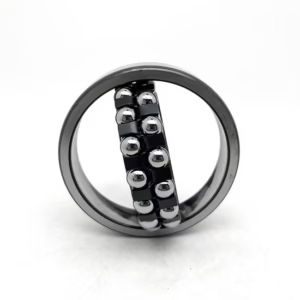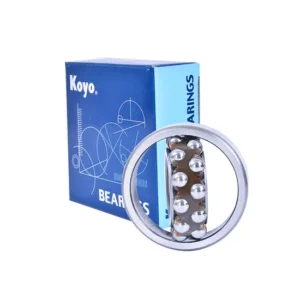
Self-Aligning Ball Bearing
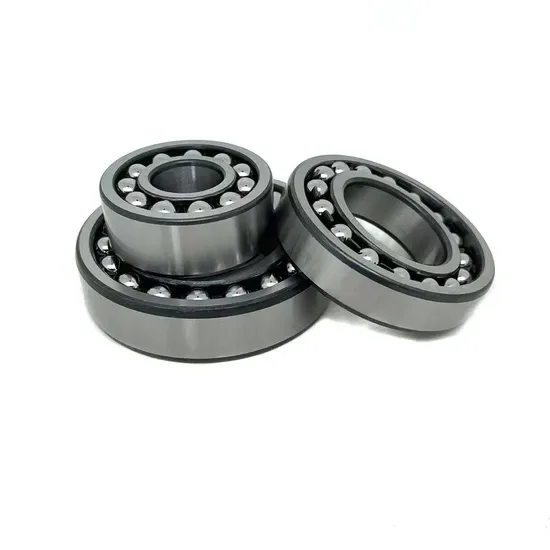
126 TN9 127 TN9 108 2200 ETN9 1201 ETN9 2201 E-2R Self-Aligning Ball Bearing — featuring glass fibre reinforced polyamide cages for high-speed operation and optimized internal designs for increased radial load capacity.
Full Cross-Brand Alignment — We verify clearance, cage material, and internal design suffixes across all major brands to ensure your mixed-brand orders install without thermal binding or premature cage failure.
| Parameter | Value |
|---|---|
| Designation | 126 TN9 127 TN9 108 2200 ETN9 1201 ETN9 2201 E-2R |
| Product Type | Self-Aligning Ball Bearing |
| Material | Bearing Steel |
| Cage Material | Glass fibre reinforced polyamide (TN9) |
| Internal Design | Optimized for increased load capacity (E suffix) |
| Alignment | Standard self-aligning capability |
| Load Direction | Radial Bearing |
| Lubrication | Grease or Oil |
| Feature | High Speed |
| Origin | Shandong, China |
| HS Code | 8482109000 |
| Customization | Available |
| Delivery Time | 15-30 Days |
Note: The 2R suffix on the 2201 E-2R variant is unverified against standard seal designations and requires manufacturer catalog confirmation prior to final ordering.
| Industry | Typical Applications |
|---|---|
| Recreational Equipment | Skateboard truck pivot assemblies requiring misalignment tolerance |
| Electric Motors | High-speed radial load zones with minor shaft deflection |
| Material Handling | Conveyor roller idler ends subject to frame flexing |
| Light Machinery | Textile machine guide rollers and household appliance motors |
Misaligned frames and high-frequency vibrations quickly destroy bearings when internal design and cage materials are mismatched.
Procurement teams often focus solely on the base bore and outside diameter, overlooking critical suffixes that dictate operational survival. When a standard clearance bearing is pressed into a tight skateboard truck housing without accounting for thermal expansion, the internal components bind under load [NEED_CITE: rolling bearing failure mode classification per ISO 15243]. We see this constantly in field replacements where the base number matched perfectly, but the lack of an optimized internal design or the wrong cage material led to catastrophic seizure within weeks. The X&S 126 TN9 127 TN9 108 2200 ETN9 1201 ETN9 2201 E-2R series addresses this by ensuring the polyamide cage and optimized raceway geometry are explicitly verified against the application’s dynamic demands.
Skateboard trucks endure relentless shock loads and continuous micro-misalignments as the deck flexes over uneven terrain. The glass fibre reinforced polyamide cages (TN9) specified in this X&S 126 TN9 127 TN9 108 2200 ETN9 1201 ETN9 2201 E-2R lineup provide the necessary elasticity to absorb these vibrations without cracking. Unlike rigid brass alternatives that can transmit shock directly to the rolling elements, this polymer matrix dampens impacts while maintaining low friction at high rotational speeds, ensuring smooth operation even when the axle bends slightly under the rider’s weight.
High-speed rotation in electric motors and conveyor rollers generates significant internal heat, which drastically alters the operational clearance of the bearing. If standard CN clearance is selected where C3 is required for thermal expansion, the rolling elements will skid and score the raceways as the inner ring expands [NEED_CITE: thermal expansion effects on radial internal clearance]. Furthermore, the choice between grease and oil lubrication must align with the maintenance schedule; sealed variants retain factory grease but cannot be relubricated, while open designs require strict contamination control to prevent abrasive wear in dusty material handling environments.
The "E" suffix denotes an optimized internal design that increases the load-carrying capacity by maximizing the rolling element size and improving the raceway contact geometry. When paired with the TN9 glass fibre reinforced polyamide cage, the bearing achieves a superior balance between high-speed capability and radial load endurance. The cage’s lightweight construction reduces centrifugal forces on the rolling elements, minimizing friction heat generation. This specific combination is critical for applications like high-speed electric motors where traditional pressed steel cages might struggle with the dynamic stresses of rapid acceleration and deceleration.
Replacing a failed bearing with a unit that matches the base designation but lacks the correct internal optimization often leads to a cascade of secondary failures. According to ISO 281 life calculation frameworks, operating a bearing outside its intended internal geometry parameters drastically reduces the fatigue life, resulting in unplanned downtime and catastrophic damage to adjacent shaft components [NEED_CITE: bearing life calculation methodologies per ISO 281]. Warranty claims are frequently voided when post-failure analysis reveals that a standard internal design was substituted for an "E" optimized variant, leaving the facility to absorb the full cost of the secondary mechanical repairs.
We eliminate the cross-reference errors that plague mixed-brand orders by verifying not just the base number, but the exact cage material and internal design suffixes. When you request the X&S 126 TN9 127 TN9 108 2200 ETN9 1201 ETN9 2201 E-2R, we ensure the TN9 polyamide cage and E-optimized geometry are strictly maintained across any cross-referenced equivalents. Our technical team reviews the application’s load, speed, and temperature parameters to confirm that the selected clearance class will prevent thermal binding. Every shipment includes full batch traceability to the manufacturer, ensuring you receive genuine bearing steel components rather than counterfeits with soft inner rings that fail under minimal load.
To ensure the selected designation perfectly matches your operational requirements, please provide the specific radial and axial loads, operating speeds, and ambient temperature ranges. If you are replacing existing units, share the exact OEM equipment numbers or the full designation string from the old bearing’s laser marking. Our engineering team will use this data to perform a comprehensive L10 life calculation and verify the cross-reference alignment, ensuring the internal design and cage materials are optimized for your specific machinery.
Q: How do I correctly cross-reference the 1200 and 2200 series without missing critical suffixes?
A: Never rely solely on the base bore and outside diameter dimensions. You must verify that the cross-referenced equivalent includes the exact TN9 polyamide cage and the E optimized internal design suffix. Missing these details often results in a bearing that fits physically but fails prematurely due to inadequate high-speed friction management or reduced load capacity. We cross-check every suffix to ensure functional equivalence.
Q: What are the operational differences between TN9 polyamide cages and pressed steel cages?
A: TN9 glass fibre reinforced polyamide cages are significantly lighter, which reduces centrifugal forces and friction heat at high rotational speeds. They also offer better elasticity to absorb shock loads and vibrations compared to rigid pressed steel cages. However, polyamide cages have stricter temperature limits and can degrade if exposed to certain aggressive chemical environments, making application context vital for selection.
Q: How does the E suffix impact the bearing’s performance in high-load applications?
A: The E suffix indicates an optimized internal design that typically features larger or more numerous rolling elements and an improved raceway contact profile. This architectural enhancement increases the dynamic load rating and extends the calculated fatigue life under heavy radial loads. It is essential for applications where the base designation alone does not provide sufficient load-carrying capacity for the operational demands.
Q: How should I choose between grease and oil lubrication for high-speed radial applications?
A: Oil lubrication is generally preferred for extremely high-speed applications as it dissipates heat more effectively and can be filtered to remove wear particles. Grease is simpler to maintain and provides excellent sealing against minor contamination, but it can churn and overheat at extreme speeds. The choice depends on your facility’s maintenance capabilities and the specific thermal limits of the application.
Q: How can I verify the authenticity of the bearings using batch traceability?
A: Every genuine bearing we supply includes batch and lot traceability documentation that links directly to the manufacturer. You can verify authenticity by scanning the provided QR codes through the brand’s official mobile applications. This process confirms the metallurgical origin and rejects sophisticated counterfeits that use cloned QR codes or feature soft inner rings that fail under operational loads.
Our engineers will respond within 12 hours with a tailored solution.
Request Quote| Bearing Type | Self-Aligning Ball Bearing |
| Brand | SKF |
| Quality Standard | ISO 9001 / TS 16949 |
| Precision Grade | P0 / P5 / P6 (custom) |
| Material | Chrome Steel / Stainless |
| Cage Material | Steel / Brass / Polyamide |
| Lubrication | Grease / Oil (specify) |
| Operating Temp. | -40°C to +200°C |
| Min. Order Qty | 1 pc (samples available) |
| Prototype Lead Time | 7 Working Days |
| Load Capacity | Contact for C0/Cr values |
| Speed Rating | Contact for ndm limit |
| Vibration Level | Z1 / Z2 / Z3 (custom) |
| Noise Level | V1 / V2 / V3 (custom) |
| Fatigue Life | L10h per ISO 281 |
| Sealing Options | Open / Z / 2Z / RS / 2RS |
Our engineering team can modify bearing dimensions, materials, seals, and clearances to meet your specific operating requirements. Submit your drawing or spec sheet for a tailored proposal.
Main shaft bearings, gearbox bearings, and generator bearings for onshore and offshore wind turbines.
Heavy-duty bearings for crushers, conveyors, and rotary equipment in extreme dust and shock-load environments.
High-temperature bearings for rolling mills, continuous casting, and furnace applications.
Wheel hub bearings, transmission bearings, and e-motor bearings for passenger and commercial vehicles.
Axle box bearings, traction motor bearings, and gearbox bearings meeting EN/UIC railway standards.
High-precision spindle bearings, angular contact bearings, and super-precision bearings for CNC and robotics.
Our engineers analyze your operating conditions -- load, speed, temperature, environment -- and select or design the optimal bearing solution to maximize service life and reduce total cost of ownership.
Need non-standard dimensions, special materials, or modified clearances? We can modify standard SKF bearings or manufacture fully custom solutions with a 7-day prototype turnaround.
When bearings fail prematurely, our team conducts root-cause analysis using advanced diagnostic tools to identify the failure mode and recommend corrective action.
We deploy vibration monitoring, thermal imaging, and oil analysis programs that detect bearing deterioration early -- reducing unplanned downtime by up to 40%.
Proper installation is critical to bearing performance. Our certified technicians provide on-site installation support, alignment verification, and operator training worldwide.
From initial selection through end-of-life, our dedicated account managers provide scheduled maintenance plans, re-lubrication programs, and replacement forecasting for enterprise clients.
NDA protected · Free samples for orders > $50K · Reply within 12 hours