

Self-Aligning Ball Bearing
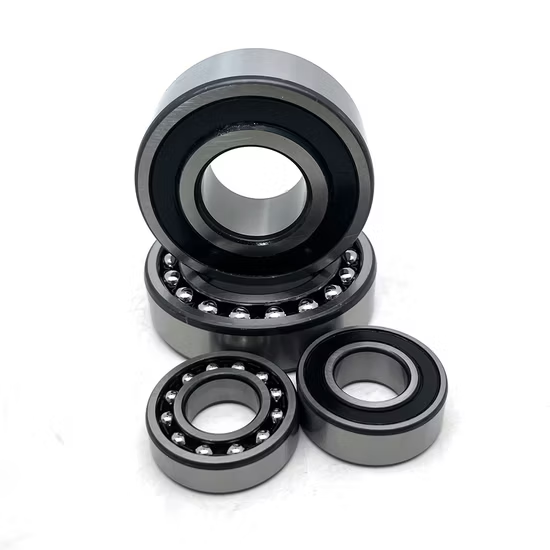
X&S 1226 2309 2202 1207 2304 Self-Aligning Ball Bearing — engineered for printing machines and tractors with HRC58-62 hardness.
Full Brand Authorization — One consolidated shipment covers all requested X&S 1226 2309 2202 1207 2304 self-aligning ball bearing variants without juggling multiple vendors.
| Parameter | Value |
|---|---|
| Designation | 1226 2309 2202 1207 2304 |
| Bearing Type | Self-Aligning Ball Bearing |
| Hardness | HRC58-62 [NEED_CITE: standard bearing steel hardness range] |
| Lubrication | Grease or Oil |
| Cage Material | Steel Cage, Brass Cage, Nylon Cage |
| Limiting Speed | 5600-18000 r/min |
| Vibration Level | V1, V2, V3, V4 |
| Clearance Class | C2, C0, C3, C4, C5 |
| Origin | Shandong, China |
| Industry | Typical Applications |
|---|---|
| Printing & Packaging | Offset printing machine cylinder bearings, high-speed folder rollers |
| Agriculture | Tractor steering column joints, harvester drive shaft supports |
| Construction & Material Handling | Conveyor belt idler pulleys, light-duty crane slewing mechanisms |
| Automotive | Steering column intermediate shafts, suspension linkage pivot points |
Thermal expansion from ink friction turns standard clearance into a mechanical lock.
During my time inspecting equipment in Dubai printing facilities, I witnessed offset presses seize completely because a standard clearance bearing was forced into a high-speed cylinder application. The friction heat expanded the inner ring, eliminating the internal gap and causing catastrophic cage failure within hours. Sourcing the correct X&S 1226 2309 2202 1207 2304 self-aligning ball bearing requires strict attention to thermal dynamics, not just matching the base number on the old part [NEED_CITE: thermal seizure mechanisms in high-speed rotating equipment]. Procurement teams often overlook these operational variables, leading to repeated unplanned downtime.
Offset printing machinery generates continuous, high-frequency vibration that demands precise internal geometry. Selecting the right X&S 1226 2309 2202 1207 2304 self-aligning ball bearing involves matching the cage material and vibration grade to the specific roller position. Our technical review process ensures that the selected configuration absorbs these oscillations without accelerating raceway fatigue, keeping the print registration perfectly aligned during long production runs.
The operating environment inside a printing press or tractor gearbox subjects components to fluctuating temperatures and heavy contamination loads. When ink dust or agricultural debris infiltrates the raceway, it acts as an abrasive grinding paste. Choosing between grease and oil lubrication depends entirely on the speed and heat generation of the specific shaft. Furthermore, selecting an expanded clearance class compensates for the thermal growth of the steel shafts, preventing the internal binding that destroys standard components under heavy continuous loads [NEED_CITE: lubrication degradation under thermal stress].
Since these base designations lack specific suffixes in their core identifiers, the operational success relies entirely on selecting the correct internal variations. A steel cage offers high rigidity for heavy radial loads, while a nylon cage reduces weight and operates quietly at higher speeds. A brass cage provides superior durability under severe vibration. Similarly, upgrading from a standard C0 clearance to C3 or C4 provides the necessary thermal expansion room for high-speed printing cylinders, ensuring the rolling elements never pinch against the raceways when the machine reaches operating temperature.
Substituting a visually similar bearing without verifying the internal clearance and cage material leads to rapid degradation. According to failure analysis frameworks like ISO 15243, surface fatigue and smearing frequently occur when thermal expansion eliminates internal clearance. This results in catastrophic damage to the shaft and housing, turning a simple component replacement into a massive repair project. Relying on incomplete cross-references voids equipment warranties and guarantees premature failure in critical applications [NEED_CITE: rolling bearing failure mode classification per ISO 15243].
We provide authorized distribution across all major international brands, allowing you to consolidate mixed-brand requirements into a single, verified order. Every batch we supply includes full traceability to the manufacturer, eliminating the risk of receiving counterfeit parts with soft inner rings. Our cross-brand interchange process strictly aligns the base designation, clearance class, and cage material, rather than just matching the basic numbers. We conduct application-based selection reviews covering load, speed, and temperature to ensure the chosen configuration survives your specific operating environment.
To ensure optimal performance, please provide your specific operational parameters, including radial and axial loads, operating speeds, and ambient temperatures. This data allows our engineering team to calculate the required L10 life and recommend the precise clearance and cage combination. If you are replacing existing components, share the original OEM equipment numbers so we can perform a comprehensive cross-reference review and guarantee exact dimensional and functional compatibility.
Q: Why must clearance and cage material align during cross-referencing?
A: Matching only the base designation ignores critical internal geometry. A standard clearance bearing will seize under high heat, while the wrong cage material will shatter under high-frequency vibration. We verify all three parameters to ensure the replacement survives your specific operational environment without causing secondary damage to the shaft or housing.
Q: How do C3 and C4 clearances differ in printing applications?
A: Standard clearance lacks the internal gap needed for thermal expansion in high-speed cylinders. C3 provides moderate expansion room for typical offset press operations, while C4 offers maximum gap for extreme heat or tight press-fit housings. Selecting the correct class prevents the inner ring from expanding and locking the rolling elements during continuous production runs.
Q: What are the speed and temperature limits for the different cage materials?
A: Steel cages offer high rigidity for heavy loads but generate more friction at extreme speeds. Nylon cages run quietly and handle high speeds well but degrade at elevated temperatures. Brass cages provide the best balance, enduring severe vibration and higher thermal limits, making them ideal for the demanding, continuous operation of heavy printing machinery.
Q: How can I identify counterfeit bearings with cloned QR codes?
A: Visual inspection is insufficient, as counterfeiters now clone QR codes that redirect to fake verification sites. We supply components with batch traceability that must be verified through the manufacturer’s official mobile application. Additionally, our material test reports and dimensional inspection documents provide independent proof of authenticity and metallurgical integrity before the parts reach your facility.
Q: When should I choose oil over grease lubrication for these bearings?
A: Grease is suitable for moderate speeds and provides excellent sealing against dust in agricultural environments. However, in high-speed offset printing machines, oil lubrication is necessary to dissipate friction heat effectively and flush away microscopic wear debris. The choice depends entirely on the limiting speed of the shaft and the required heat transfer rate.
Our engineers will respond within 12 hours with a tailored solution.
Request Quote| Bearing Type | Self-Aligning Ball Bearing |
| Brand | SKF |
| Quality Standard | ISO 9001 / TS 16949 |
| Precision Grade | P0 / P5 / P6 (custom) |
| Material | Chrome Steel / Stainless |
| Cage Material | Steel / Brass / Polyamide |
| Lubrication | Grease / Oil (specify) |
| Operating Temp. | -40°C to +200°C |
| Min. Order Qty | 1 pc (samples available) |
| Prototype Lead Time | 7 Working Days |
| Load Capacity | Contact for C0/Cr values |
| Speed Rating | Contact for ndm limit |
| Vibration Level | Z1 / Z2 / Z3 (custom) |
| Noise Level | V1 / V2 / V3 (custom) |
| Fatigue Life | L10h per ISO 281 |
| Sealing Options | Open / Z / 2Z / RS / 2RS |
Our engineering team can modify bearing dimensions, materials, seals, and clearances to meet your specific operating requirements. Submit your drawing or spec sheet for a tailored proposal.
Main shaft bearings, gearbox bearings, and generator bearings for onshore and offshore wind turbines.
Heavy-duty bearings for crushers, conveyors, and rotary equipment in extreme dust and shock-load environments.
High-temperature bearings for rolling mills, continuous casting, and furnace applications.
Wheel hub bearings, transmission bearings, and e-motor bearings for passenger and commercial vehicles.
Axle box bearings, traction motor bearings, and gearbox bearings meeting EN/UIC railway standards.
High-precision spindle bearings, angular contact bearings, and super-precision bearings for CNC and robotics.
Our engineers analyze your operating conditions -- load, speed, temperature, environment -- and select or design the optimal bearing solution to maximize service life and reduce total cost of ownership.
Need non-standard dimensions, special materials, or modified clearances? We can modify standard SKF bearings or manufacture fully custom solutions with a 7-day prototype turnaround.
When bearings fail prematurely, our team conducts root-cause analysis using advanced diagnostic tools to identify the failure mode and recommend corrective action.
We deploy vibration monitoring, thermal imaging, and oil analysis programs that detect bearing deterioration early -- reducing unplanned downtime by up to 40%.
Proper installation is critical to bearing performance. Our certified technicians provide on-site installation support, alignment verification, and operator training worldwide.
From initial selection through end-of-life, our dedicated account managers provide scheduled maintenance plans, re-lubrication programs, and replacement forecasting for enterprise clients.
NDA protected · Free samples for orders > $50K · Reply within 12 hours


