

ISO 9001 Certified
TS 16949
Genuine SKF
Need Technical Advice?
Reply within 12 hours · 15+ certified engineers on call
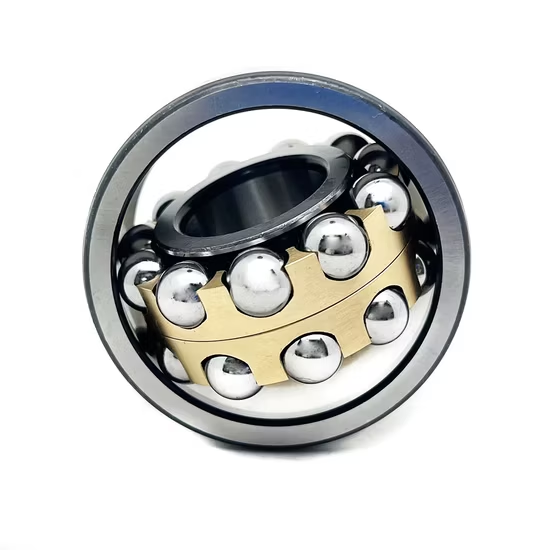
Self-Aligning Ball Bearing
Self-Aligning Ball Bearing 1206 2207 1308 for Agricultural Harvesters [WARN] draft identifier mismatch
X&S 1206 2207 1308 Self-Aligning Ball Bearings accommodate shaft misalignment in agricultural harvesters.
- Chrome steel construction ensures durability, supporting limiting speeds up to 18000 r/min.
- Our technical cross-reference strictly aligns clearance, cage design, and precision to prevent thermal binding.
7
Day Prototype
vs. 8-12 wks standard
50+
Countries Served
Global logistics network
12h
Quote Response
Expert engineers on call
Typical Applications
Wind Power
Mining
Steel & Metallurgy
Automotive / EV
Rail Transit
Precision Machinery
Genuine SKF Bearings
NDA Protected
Free Sample for Orders > $50K
Global Shipping
Product Details
Batch Traceability — Every shipment of 1206 2207 1308 self-aligning ball bearings includes verifiable lot documentation linked directly to the manufacturer’s production facilities.
Technical Specifications
| Parameter | Value |
|---|---|
| Designation | 1206 2207 1308 |
| Bearing Type | Self-Aligning Ball Bearing |
| Limiting Speed | 5600-18000 r/min |
| Vibration Level | V1, V2, V3, V4 |
| Clearance Class | C2, C0, C3, C4, C5 |
| Lubrication | Grease or Oil |
| Material | Chrome Steel |
| Origin | China |
| HS Code | 8482101090 |
Application Suitability
| Industry | Typical Applications |
|---|---|
| Agricultural Harvesters | Main drive shafts, threshing drum supports, and header lift mechanisms |
| Agricultural Machinery | Conveyor drive rollers, auger flighting bearings, and PTO shaft supports |
| Material Handling | Belt conveyor idler pulleys and bucket elevator tail shafts |
Why Base Numbers Alone Cause Harvester Shaft Failures
Matching the base designation without verifying internal clearance and vibration grades leads to rapid thermal seizure in harvesting equipment.
In Southeast Asian fields, ambient heat combined with continuous heavy loads causes significant thermal expansion in harvester drive shafts. When procurement teams order standard bearings based solely on the base number, they often receive standard clearance variants that lack the necessary internal room for expansion. This results in the bearing binding under operating temperatures, leading to catastrophic cage failure and burnt spindles right in the middle of the harvest season [NEED_CITE: rolling bearing failure mode classification per ISO 15243]. Sourcing the correct 1206 2207 1308 self-aligning ball bearing requires looking beyond the basic digits to ensure the internal geometry matches the thermal and dynamic realities of the field.
Accommodating Misalignment in Dusty Field Conditions
Harvester frames flex heavily when traversing uneven terrain, imposing angular misalignment on drive shafts. The 1206 2207 1308 self-aligning ball bearing features a spherical outer ring raceway that allows the inner ring and ball assembly to align freely with the outer ring. This self-aligning capability prevents edge loading on the rolling elements, which is critical when shaft deflection occurs due to uneven crop density or sudden impact loads from hidden rocks in the field.
Managing Thermal Expansion and Contamination
Dust and crop residue create an highly abrasive environment that rapidly degrades lubrication. Selecting the appropriate clearance class is vital; while a standard C0 clearance might suffice for lightly loaded idlers, main drive shafts exposed to direct sunlight and friction heat require a C3 or larger clearance to prevent internal preload from building up as the steel expands. Furthermore, choosing the right vibration grade ensures the bearing operates smoothly despite the inherent imbalance of rotating threshing drums, reducing the risk of lubricant churn and premature grease degradation [NEED_CITE: impact of misalignment and clearance on bearing service life per ISO 281].
Decoding the Available Configuration Options
Although the base designations define the boundary dimensions, the operational success of these components relies on selecting the correct internal variants. The available clearance classes ranging from C2 to C5 dictate how the bearing handles thermal growth and heavy press fits on solid shafts. Similarly, the vibration levels from V1 to V4 allow buyers to specify tighter manufacturing tolerances for high-speed PTO shafts where excessive vibration could accelerate fatigue. The chrome steel construction provides the necessary core hardness to withstand the shock loads typical of agricultural engagement, while the option for grease or oil lubrication allows maintenance teams to match the bearing to their existing centralized auto-lube systems or manual greasing schedules.
The Downtime Cost of Overlooking Suffix Details
Replacing a failed bearing with a visually identical unit that has the wrong internal clearance often results in a repeat failure within days. When a standard clearance bearing is forced onto a tight shaft fit in a hot environment, the internal radial clearance is entirely eliminated. This causes the rolling elements to skid rather than roll, generating immense friction heat that destroys the cage and welds the balls to the raceway. Such unplanned downtime during peak harvest windows causes severe financial losses far exceeding the component cost, making rigorous cross-reference validation an absolute necessity for fleet maintenance managers.
Securing Reliable Supply for Mixed Fleet Maintenance
Sourcing these specific agricultural components often involves navigating a fragmented supplier landscape, but our approach consolidates the procurement process. We provide authorized coverage across all major international brands, allowing you to fulfill mixed-brand requirements for your entire harvester fleet in a single order. Our cross-brand interchange process strictly matches clearance, cage material, and precision—not just the base designation—ensuring that a replacement performs identically to the OEM specification. Every unit undergoes an application-based selection review covering load, speed, and temperature to prevent the common field failures caused by mismatched internal designs. Furthermore, our deep inventory of less common clearance and vibration combinations minimizes the lead times that typically stall critical repairs during the busy season.
Documentation & Authenticity
- Certificate of Conformity verifying the exact clearance class and vibration grade for each batch.
- Batch and lot traceability linking the 1206 2207 1308 units directly to the original manufacturing run.
- QR verification via official brand apps to instantly confirm authenticity and rule out cloned packaging.
- Material test report confirming the chrome steel chemistry and core hardness specifications.
- Dimensional and running accuracy inspection report validating the spherical raceway tolerances before dispatch.
- Country-of-origin documentation to ensure smooth customs clearance for international agricultural shipments.
Storage, Handling & Mounting
- Store the chrome steel bearings in their original moisture-barrier packaging until the exact moment of installation to prevent raceway corrosion.
- Avoid exposing the units to direct sunlight or high ambient warehouse temperatures, which can prematurely degrade the factory-applied grease.
- Use clean, lint-free gloves when handling the open-type variants to prevent acidic skin contact from etching the precision spherical outer raceway.
- Employ induction heaters with automatic demagnetization for mounting the inner rings onto solid harvester shafts to preserve the specified clearance class.
- Ensure the housing bore is thoroughly cleaned of crop dust and old grease before seating the outer ring to maintain the self-aligning float.
- Apply the recommended agricultural-grade lithium complex grease to the open variants immediately after mounting to displace any residual moisture.
Engineering Your Exact Replacement
To ensure the selected units withstand your specific operational demands, please provide the radial and axial load profiles, operating speeds, and expected temperature ranges of your harvester drive systems. Sharing the exact OEM equipment numbers or existing housing dimensions allows our engineering team to perform a precise cross-reference and L10 life calculation. If your application involves extreme dust ingress or high-pressure washdowns, detailing these environmental factors will help us recommend the optimal sealing and lubrication configuration for your fleet.
Frequently Asked Questions
Q: Why is matching the clearance class critical when replacing these bearings in harvesters?
A: Harvesters generate significant friction and operate in high ambient temperatures, causing shafts and housings to expand. If a replacement bearing lacks the correct expanded clearance class, the internal gap disappears under heat, leading to excessive friction, cage failure, and shaft seizure. Matching the clearance ensures the bearing accommodates thermal growth safely.
Q: How do you verify the authenticity and batch traceability of the supplied bearings?
A: We supply a Certificate of Conformity and batch traceability documents with every shipment. Buyers can scan the QR codes on the packaging using the manufacturer’s official mobile application to instantly verify the product’s origin, production date, and authenticity, effectively eliminating the risk of installing counterfeit components with soft inner rings.
Q: What are the common cross-reference pitfalls when sourcing these self-aligning units?
A: The most frequent error is matching only the base designation while ignoring internal design variations. A base number might match, but the replacement could have a standard clearance instead of the required expanded clearance, or a stamped steel cage instead of a machined brass one. This mismatch leads to rapid failure under the heavy shock loads typical in agricultural machinery.
Q: How should I select the correct vibration level for my harvesting equipment?
A: Vibration levels indicate the manufacturing precision and running smoothness of the bearing. For highly sensitive or high-speed components like PTO shafts, a stricter vibration grade is necessary to prevent resonant frequencies that accelerate fatigue. For slower, heavily loaded conveyor rollers, a standard vibration grade is usually sufficient and more cost-effective.
Q: What lubrication type is recommended for these agricultural applications?
A: The choice between grease and oil depends on the housing design and maintenance schedule. Sealed or shielded variants typically rely on factory-filled grease for life, while open bearings in centralized auto-lube systems require compatible agricultural grease. Oil lubrication is generally reserved for enclosed gearboxes where the bearing shares the lubricant with the gears.
Product Summary
- Product Name
- Self-Aligning Ball Bearing 1206 2207 1308 for Agricultural Harvesters [WARN] draft identifier mismatch
- Category
- Self-Aligning Ball Bearing
- Brand
- SKF
- Certification
- ISO 9001 · TS 16949
- Lead Time
- 7 Working Days
Get a Custom Quote
Our engineers will respond within 12 hours with a tailored solution.
Request QuoteGeneral Specifications
| Bearing Type | Self-Aligning Ball Bearing |
| Brand | SKF |
| Quality Standard | ISO 9001 / TS 16949 |
| Precision Grade | P0 / P5 / P6 (custom) |
| Material | Chrome Steel / Stainless |
| Cage Material | Steel / Brass / Polyamide |
| Lubrication | Grease / Oil (specify) |
| Operating Temp. | -40°C to +200°C |
| Min. Order Qty | 1 pc (samples available) |
| Prototype Lead Time | 7 Working Days |
Performance Parameters
| Load Capacity | Contact for C0/Cr values |
| Speed Rating | Contact for ndm limit |
| Vibration Level | Z1 / Z2 / Z3 (custom) |
| Noise Level | V1 / V2 / V3 (custom) |
| Fatigue Life | L10h per ISO 281 |
| Sealing Options | Open / Z / 2Z / RS / 2RS |
Custom Specifications Available
Our engineering team can modify bearing dimensions, materials, seals, and clearances to meet your specific operating requirements. Submit your drawing or spec sheet for a tailored proposal.
Wind Power
Main shaft bearings, gearbox bearings, and generator bearings for onshore and offshore wind turbines.
Mining & Quarrying
Heavy-duty bearings for crushers, conveyors, and rotary equipment in extreme dust and shock-load environments.
Steel & Metallurgy
High-temperature bearings for rolling mills, continuous casting, and furnace applications.
Automotive / EV
Wheel hub bearings, transmission bearings, and e-motor bearings for passenger and commercial vehicles.
Rail Transit
Axle box bearings, traction motor bearings, and gearbox bearings meeting EN/UIC railway standards.
Precision Machinery
High-precision spindle bearings, angular contact bearings, and super-precision bearings for CNC and robotics.
Application Design
EngineeringOur engineers analyze your operating conditions -- load, speed, temperature, environment -- and select or design the optimal bearing solution to maximize service life and reduce total cost of ownership.
Custom Modification
7-Day TurnaroundNeed non-standard dimensions, special materials, or modified clearances? We can modify standard SKF bearings or manufacture fully custom solutions with a 7-day prototype turnaround.
Failure Analysis
DiagnosticsWhen bearings fail prematurely, our team conducts root-cause analysis using advanced diagnostic tools to identify the failure mode and recommend corrective action.
Predictive Maintenance
Up to 40% Less DowntimeWe deploy vibration monitoring, thermal imaging, and oil analysis programs that detect bearing deterioration early -- reducing unplanned downtime by up to 40%.
On-site Installation
Global CoverageProper installation is critical to bearing performance. Our certified technicians provide on-site installation support, alignment verification, and operator training worldwide.
Lifecycle Support
Enterprise SLAFrom initial selection through end-of-life, our dedicated account managers provide scheduled maintenance plans, re-lubrication programs, and replacement forecasting for enterprise clients.
Why SKF China
The engineering partner advantage
7 Days
Prototype Lead Time
vs. 8-12 weeks via standard channels
15+
Certified Engineers
SKF-certified, on-call for your project
50+
Countries Delivered
Reliable global logistics network
Request a Quote
Get a custom quote for
Self-Aligning Ball Bearing 1206 2207 1308 for Agricultural Harvesters [WARN] draft identifier mismatch
NDA protected · Free samples for orders > $50K · Reply within 12 hours
Related Products
More Self-Aligning Ball Bearing Products
Self-Aligning Ball Bearing
2209K-2RS 2210K-2RS 2211K-2RS Self Aligning Ball Bearings

Self-Aligning Ball Bearing