
ISO 9001 Certified
TS 16949
Genuine SKF
Need Technical Advice?
Reply within 12 hours · 15+ certified engineers on call
Wheel Hub Bearing
Salt Mist Resistant Rotary Shaft Oil Seal for Marine Hydraulic Equipment
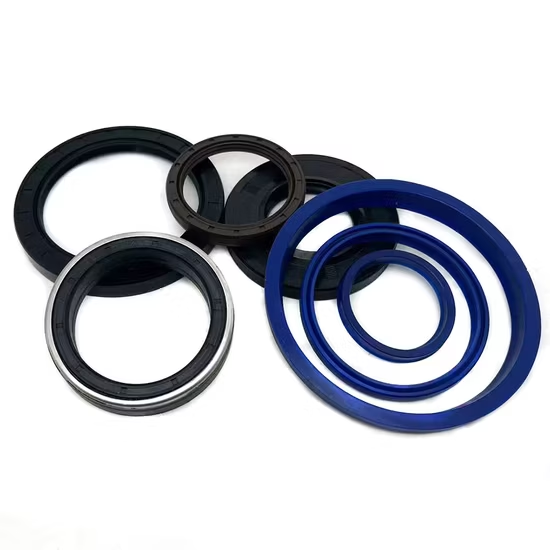
Salt Mist Resistant Rotary Shaft Oil Seal — NBR rubber construction rated for marine hydraulic equipment with excellent oil and aging resistance.
- Operating temperature range from -40℃ to 120℃ with multiple lip structures including TC and TB for medium rotating speeds
- ISO9001 certified manufacturing ensures reliable sealing performance in high-salinity and corrosive environments
- Verify batch authenticity directly through the official app QR verification channel for guaranteed material traceability
7
Day Prototype
vs. 8-12 wks standard
50+
Countries Served
Global logistics network
12h
Quote Response
Expert engineers on call
Typical Applications
Wind Power
Mining
Steel & Metallurgy
Automotive / EV
Rail Transit
Precision Machinery
Genuine SKF Bearings
NDA Protected
Free Sample for Orders > $50K
Global Shipping
Product Details
Batch Traceability Guaranteed — Every production lot is tracked back to the vulcanization curing parameters to ensure consistent elastomer density.
Technical Specifications
| Parameter | Value |
|---|---|
| Product Type | Rotary Shaft Oil Seal |
| Material Options | NBR Rubber, FKM, PTFE variants available |
| Working Temperature Range | -40℃ ~ 120℃ (NBR baseline) |
| Seal Structure Options | TC, SC, TB, TA, VC |
| Hardness Range | 60 ~ 90 Shore A |
| Operating Speed | Medium Rotating Speed |
| Primary Features | Oil Resistance, Wear Resistance, Aging Resistance |
| Certification | ISO9001 |
| Origin | Shandong |
Application Suitability
| Industry | Typical Applications |
|---|---|
| Marine & Offshore | Deck crane slewing gearboxes, steering gear hydraulic rams, winch drive shafts |
| Construction | Excavator swing motors, bulldozer final drive hubs operating in coastal zones |
| Agriculture | Tractor PTO shaft seals, combine harvester hydraulic pumps exposed to humid fields |
Why Salt Mist Destroys Standard Seals Before the Steel Rusts
Standard elastomers degrade chemically long before metallic components show visible corrosion.
Working on hydraulic rigs off the coast of Dubai, I repeatedly pulled seals where the outer casing was pristine but the sealing lip had turned into brittle plastic. The microscopic salt aerosol in marine air penetrates standard rubber compounds, accelerating oxidation and causing the lip to lose its elastic memory. When procuring from a reliable salt mist resistant rotary shaft oil seal supplier, the focus must shift from mere dimensional matching to verifying the polymer’s resistance to saline-induced chain scission [NEED_CITE: elastomer degradation mechanisms in saline environments].
Matching Elastomer Profiles to Marine Hydraulic Demands
Selecting the correct sealing element requires aligning the polymer formulation with the specific hydraulic fluid and ambient salinity. We review your operating parameters to ensure the chosen compound maintains its sealing force without swelling or shrinking. As a specialized salt mist resistant rotary shaft oil seal supplier, we cross-reference your fluid compatibility charts against our material database to prevent catastrophic chemical incompatibility.
Navigating Thermal and Mechanical Stress in Coastal Operations
Marine hydraulic systems endure intense thermal cycling from tropical sun exposure to cold ocean drafts, which drastically affects lip flexibility. The sealing edge must maintain constant radial pressure against the shaft despite these fluctuations, while resisting abrasive salt crystals that accumulate on the exposed rod. Proper lip geometry selection is critical to manage the friction heat generated at medium rotating speeds without compromising the atmospheric barrier [NEED_CITE: friction heat generation in dynamic rotary seals].
Decoding Lip Geometry and Material Selection
The structural design dictates how the seal handles pressure and misalignment. TC and SC designs feature a secondary dust lip to block external salt particulates, making them ideal for exposed deck machinery. TB and TA configurations offer heavier metal casings and reinforced rubber heels for high-pressure hydraulic pumps where housing vibration is severe. While NBR provides excellent mineral oil resistance within its thermal limits, FKM or PTFE options are available for elevated temperatures or synthetic fire-resistant hydraulic fluids. The 60 to 90 Shore A hardness range allows customization; softer compounds track shaft runout better, while harder compounds resist extrusion in high-pressure zones.
The Hidden Toll of Incorrect Lip Selection
Choosing a seal based solely on inner and outer diameter measurements ignores the dynamic realities of the application. An under-specified lip design will allow saline moisture to bypass the primary sealing edge, leading to rapid bearing corrosion and hydraulic fluid contamination. According to failure analysis frameworks, surface degradation caused by abrasive ingress is a primary driver of premature system breakdown [NEED_CITE: seal failure modes per ISO 15243 classification]. This inevitably results in unplanned vessel downtime and voided equipment warranties.
Securing Reliability Through Technical Verification
Our procurement process eliminates the guesswork that plagues standard catalog orders. We verify that the selected lip structure matches your exact pressure and speed requirements, preventing the common error of installing low-pressure TC seals in high-load TB applications. Every batch is validated for Shore A hardness and dimensional tolerance to ensure the interference fit remains secure under vibration. Furthermore, we provide cross-brand interchange expertise, ensuring that if an OEM part is obsolete, the replacement matches the original’s elastomer grade and spring tension, not just the basic physical envelope.
Documentation & Authenticity
- Certificate of Conformity verifying the specific NBR or FKM compound batch used.
- Lot traceability linking the vulcanization date to the raw elastomer source.
- Material test reports confirming resistance to standard hydraulic fluid immersion.
- Dimensional inspection data validating lip inner diameter interference tolerances.
- Shore A hardness certificates ensuring the rubber meets the specified durometer range.
Storage, Handling & Mounting Protocols
- Store seals in original opaque packaging to prevent UV degradation of the NBR rubber compound.
- Avoid using carbon steel tools during installation to prevent embedding rust particles in the TC lip.
- Apply a thin film of the system’s hydraulic fluid to the SC secondary lip before sliding it over the shaft.
- Ensure the shaft surface roughness meets specifications to prevent abrasive wear on the primary TA sealing edge.
- Keep the stainless steel garter spring free of moisture until the exact moment of assembly to prevent flash rust.
Engineering Support for Complex Applications
To ensure optimal performance, our technical team requires specific operational data to finalize the selection. Please provide the exact hydraulic fluid type, maximum system pressure, and shaft surface speed so we can recommend the appropriate lip structure and elastomer grade. Supplying the OEM equipment model or detailed housing dimensions allows us to engineer a solution that addresses your specific environmental challenges.
Frequently Asked Questions
Q: How do I choose between TC, TB, and TA structures for my deck crane?
A: TC seals include a secondary dust lip ideal for keeping salt aerosols out of standard gearboxes. TB and TA designs feature reinforced heels and heavier casings, making them necessary for high-pressure hydraulic pumps where internal fluid pressure and housing vibration are significant. We evaluate your pressure and contamination levels to specify the correct geometry.
Q: When should I upgrade from NBR to FKM or PTFE in marine environments?
A: NBR performs excellently with standard mineral oils up to its thermal limit. If your hydraulic system utilizes synthetic fire-resistant fluids, or if ambient engine room temperatures consistently exceed standard thresholds, FKM or PTFE variants are required. We review your fluid compatibility and thermal profile to recommend the appropriate material upgrade.
Q: How does shaft surface condition affect the lifespan of these seals?
A: The shaft surface roughness and hardness directly dictate wear rates. A shaft that is too rough will act like sandpaper against the NBR lip, while a soft shaft will develop grooves that compromise the sealing line. We provide specific surface finish and hardness guidelines to ensure the seal achieves its maximum operational lifecycle.
Q: My original equipment is obsolete; how do you determine the replacement?
A: We do not rely solely on basic dimensional measurements. By analyzing your operating speed, pressure, and environmental exposure, we identify the required lip geometry and spring tension. Provide your equipment parameters and housing dimensions, and our engineering team will specify a functionally equivalent or upgraded sealing solution.
Product Summary
- Product Name
- Salt Mist Resistant Rotary Shaft Oil Seal for Marine Hydraulic Equipment
- Category
- Wheel Hub Bearing
- Brand
- SKF
- Certification
- ISO 9001 · TS 16949
- Lead Time
- 7 Working Days
Get a Custom Quote
Our engineers will respond within 12 hours with a tailored solution.
Request QuoteGeneral Specifications
| Bearing Type | Wheel Hub Bearing |
| Brand | SKF |
| Quality Standard | ISO 9001 / TS 16949 |
| Precision Grade | P0 / P5 / P6 (custom) |
| Material | Chrome Steel / Stainless |
| Cage Material | Steel / Brass / Polyamide |
| Lubrication | Grease / Oil (specify) |
| Operating Temp. | -40°C to +200°C |
| Min. Order Qty | 1 pc (samples available) |
| Prototype Lead Time | 7 Working Days |
Performance Parameters
| Load Capacity | Contact for C0/Cr values |
| Speed Rating | Contact for ndm limit |
| Vibration Level | Z1 / Z2 / Z3 (custom) |
| Noise Level | V1 / V2 / V3 (custom) |
| Fatigue Life | L10h per ISO 281 |
| Sealing Options | Open / Z / 2Z / RS / 2RS |
Custom Specifications Available
Our engineering team can modify bearing dimensions, materials, seals, and clearances to meet your specific operating requirements. Submit your drawing or spec sheet for a tailored proposal.
Wind Power
Main shaft bearings, gearbox bearings, and generator bearings for onshore and offshore wind turbines.
Mining & Quarrying
Heavy-duty bearings for crushers, conveyors, and rotary equipment in extreme dust and shock-load environments.
Steel & Metallurgy
High-temperature bearings for rolling mills, continuous casting, and furnace applications.
Automotive / EV
Wheel hub bearings, transmission bearings, and e-motor bearings for passenger and commercial vehicles.
Rail Transit
Axle box bearings, traction motor bearings, and gearbox bearings meeting EN/UIC railway standards.
Precision Machinery
High-precision spindle bearings, angular contact bearings, and super-precision bearings for CNC and robotics.
Application Design
EngineeringOur engineers analyze your operating conditions -- load, speed, temperature, environment -- and select or design the optimal bearing solution to maximize service life and reduce total cost of ownership.
Custom Modification
7-Day TurnaroundNeed non-standard dimensions, special materials, or modified clearances? We can modify standard SKF bearings or manufacture fully custom solutions with a 7-day prototype turnaround.
Failure Analysis
DiagnosticsWhen bearings fail prematurely, our team conducts root-cause analysis using advanced diagnostic tools to identify the failure mode and recommend corrective action.
Predictive Maintenance
Up to 40% Less DowntimeWe deploy vibration monitoring, thermal imaging, and oil analysis programs that detect bearing deterioration early -- reducing unplanned downtime by up to 40%.
On-site Installation
Global CoverageProper installation is critical to bearing performance. Our certified technicians provide on-site installation support, alignment verification, and operator training worldwide.
Lifecycle Support
Enterprise SLAFrom initial selection through end-of-life, our dedicated account managers provide scheduled maintenance plans, re-lubrication programs, and replacement forecasting for enterprise clients.
Why SKF China
The engineering partner advantage
7 Days
Prototype Lead Time
vs. 8-12 weeks via standard channels
15+
Certified Engineers
SKF-certified, on-call for your project
50+
Countries Delivered
Reliable global logistics network
Request a Quote
Get a custom quote for
Salt Mist Resistant Rotary Shaft Oil Seal for Marine Hydraulic Equipment
NDA protected · Free samples for orders > $50K · Reply within 12 hours
Related Products
More Wheel Hub Bearing Products

![X&S DAC35720233/31 Wheel Hub Bearing for EV Electric Vehicle [WARN] draft identifier mismatch](https://skfip.com/wp-content/uploads/2026/09/xs-dac35720233-31-wheel-hub-bearing-for-ev-electric-vehicle-warn-draft-identifier-mismatch-80e4b1.avif)
![X&S DAC32720038 DAC32720345 Wheel Hub Bearing for Rolling Mill [WARN] draft identifier mismatch](https://skfip.com/wp-content/uploads/2026/09/xs-dac32720038-dac32720345-wheel-hub-bearing-for-rolling-mill-warn-draft-identifier-mismatch-734921.avif)