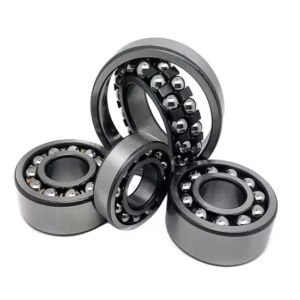
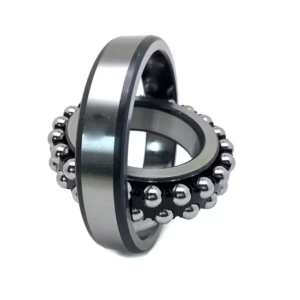
Self-Aligning Ball Bearing
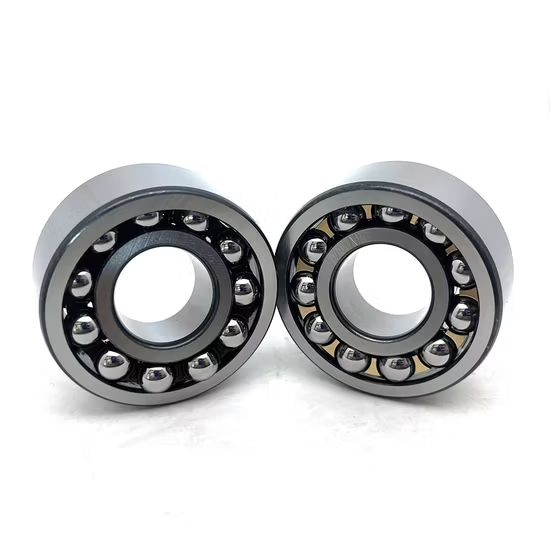
2312 2312TN 2312K 2312KTN 2312-2RS Self-Aligning Ball Bearing
Unified Multi-Brand Sourcing — Fulfill mixed-brand agricultural and tractor maintenance requirements through a single authorized channel, eliminating the need to coordinate with multiple vendors for different shaft and housing components.
| Parameter | Value |
|---|---|
| Designation | 2312 |
| Bearing Type | Self-Aligning Ball Bearing |
| Bore Type | Cylindrical and Tapered (1:12) variants |
| Cage Material Options | Steel, Brass, Nylon |
| Seal or Shield Type | Open and Double Contact Seals |
| Clearance Class | C2, C0, C3, C4, C5 |
| Vibration Level | V1, V2, V3, V4 |
| Material Hardness | HRC58-62 [NEED_CITE: standard hardness range for through-hardened bearing rings] |
| Lubrication | Grease or Oil |
| Origin | Shandong, China |
*Note: Suffixes ‘TN’ and ‘2RS’ are common industry variations indicating polyamide cages and double contact seals respectively, but exact mapping requires manufacturer catalog confirmation.
| Industry | Typical Applications |
|---|---|
| Agricultural Machinery | Combine harvester rotor shafts, tractor steering columns, plow adjustment mechanisms |
| Construction Machinery | Vibratory roller eccentric shafts, concrete mixer drum supports, compact loader articulation joints |
| Automotive | Heavy-duty truck suspension pivot points, steering gear input shafts |
Shaft deflection demands self-alignment, but thermal expansion demands precise internal clearance.
In Latin American mining and agricultural sites, I have witnessed countless 2312 self-aligning ball bearing units seize completely because the base designation matched while the internal clearance was ignored. When heavy radial loads generate friction heat, a standard C0 clearance rapidly disappears, causing the rolling elements to bind against the raceways. The resulting thermal runaway fractures the cage and destroys the shaft [NEED_CITE: thermal seizure failure modes in rolling bearings per ISO 15243]. Selecting the correct C3 or C4 clearance is not optional; it is the primary defense against unplanned downtime in high-temperature, heavy-load environments.
Agricultural implements routinely encounter severe shaft deflections due to uneven terrain and heavy crop loads. The 2312 self-aligning ball bearing accommodates these static and dynamic angular misalignments, protecting the machinery from premature structural fatigue. Our technical review process ensures that the selected variant matches the specific misalignment angle and load magnitude of your equipment, preventing edge-loading on the outer ring.
Dust, crop residue, and moisture constantly threaten exposed drivetrain components. Choosing between an open design with external sealing or a factory-sealed variant dictates the maintenance interval and contamination resistance. While sealed options prevent particulate ingress, they introduce friction heat; open designs require robust external labyrinth seals and strict regreasing schedules to flush out abrasive debris [NEED_CITE: contamination impact on bearing fatigue life per ISO 281].
The internal configuration dictates field survival. Tapered bore variants require precise withdrawal sleeve tightening to achieve the correct residual clearance, preventing the inner ring from spinning on the shaft. Cage material selection is equally vital: brass cages withstand heavy shock loads and vibration, steel cages offer cost-effective durability for standard speeds, and polyamide variants reduce weight and noise but have strict thermal limits. Matching the vibration grade to the tractor’s operating RPM ensures structural integrity.
Substituting a dimensionally identical unit without verifying the exact clearance class, cage material, and bore type leads to rapid field failure. A standard clearance bearing installed in a high-heat harvester gearbox will thermally bind within hours. Similarly, using a polyamide cage in a high-shock rock crusher application results in immediate cage fragmentation. These misalignments void warranties and trigger catastrophic secondary damage to expensive shafts and housings.
We eliminate guesswork by verifying cross-references across base numbers, clearance classes, and cage materials to prevent thermal binding in your specific application. Every batch features full traceability to the manufacturer, verified via official brand apps, ensuring you receive genuine components. Our technical team reviews your load, speed, and temperature parameters to confirm the exact suffix combination required, avoiding the costly errors of模糊 matching.
To ensure optimal service life, provide your specific radial and axial load calculations, operating temperature ranges, and shaft misalignment estimates. Share the OEM equipment number or existing designation so our engineering team can perform a precise cross-reference check. This data allows us to validate the L10 life and confirm the exact suffix combination required for your machinery’s unique operating envelope.
Q: How do I choose between C0, C3, and C4 clearance for agricultural gearboxes?
A: Standard C0 clearance suits normal temperatures and loads. C3 provides extra internal space for thermal expansion in warm environments or continuous heavy-duty operation. C4 is reserved for extreme heat or severe interference fits. Selecting the wrong class causes thermal binding or excessive vibration.
Q: What are the cross-reference risks when switching cage materials?
A: Switching from a brass cage to a polyamide cage in high-shock applications risks cage fragmentation. Conversely, using brass where polyamide was specified might alter the vibration characteristics. Always verify the cage material suffix matches the original equipment manufacturer’s shock load and speed requirements.
Q: How does the vibration level affect tractor applications?
A: Higher vibration grades indicate tighter manufacturing tolerances for rolling elements and raceways, resulting in smoother operation. In noise-sensitive or high-speed tractor cabins, specifying a higher vibration grade reduces structural resonance and operator fatigue while extending the drivetrain’s operational lifespan.
Q: What is the correct mounting procedure for the tapered bore variants?
A: Mounting requires a withdrawal sleeve and lock nut. Drive the bearing onto the sleeve until the internal clearance is reduced to the specified residual value. Over-tightening eliminates clearance causing seizure, while under-tightening allows the inner ring to creep on the shaft, destroying the mounting surface.
Our engineers will respond within 12 hours with a tailored solution.
Request Quote| Bearing Type | Self-Aligning Ball Bearing |
| Brand | SKF |
| Quality Standard | ISO 9001 / TS 16949 |
| Precision Grade | P0 / P5 / P6 (custom) |
| Material | Chrome Steel / Stainless |
| Cage Material | Steel / Brass / Polyamide |
| Lubrication | Grease / Oil (specify) |
| Operating Temp. | -40°C to +200°C |
| Min. Order Qty | 1 pc (samples available) |
| Prototype Lead Time | 7 Working Days |
| Load Capacity | Contact for C0/Cr values |
| Speed Rating | Contact for ndm limit |
| Vibration Level | Z1 / Z2 / Z3 (custom) |
| Noise Level | V1 / V2 / V3 (custom) |
| Fatigue Life | L10h per ISO 281 |
| Sealing Options | Open / Z / 2Z / RS / 2RS |
Our engineering team can modify bearing dimensions, materials, seals, and clearances to meet your specific operating requirements. Submit your drawing or spec sheet for a tailored proposal.
Main shaft bearings, gearbox bearings, and generator bearings for onshore and offshore wind turbines.
Heavy-duty bearings for crushers, conveyors, and rotary equipment in extreme dust and shock-load environments.
High-temperature bearings for rolling mills, continuous casting, and furnace applications.
Wheel hub bearings, transmission bearings, and e-motor bearings for passenger and commercial vehicles.
Axle box bearings, traction motor bearings, and gearbox bearings meeting EN/UIC railway standards.
High-precision spindle bearings, angular contact bearings, and super-precision bearings for CNC and robotics.
Our engineers analyze your operating conditions -- load, speed, temperature, environment -- and select or design the optimal bearing solution to maximize service life and reduce total cost of ownership.
Need non-standard dimensions, special materials, or modified clearances? We can modify standard SKF bearings or manufacture fully custom solutions with a 7-day prototype turnaround.
When bearings fail prematurely, our team conducts root-cause analysis using advanced diagnostic tools to identify the failure mode and recommend corrective action.
We deploy vibration monitoring, thermal imaging, and oil analysis programs that detect bearing deterioration early -- reducing unplanned downtime by up to 40%.
Proper installation is critical to bearing performance. Our certified technicians provide on-site installation support, alignment verification, and operator training worldwide.
From initial selection through end-of-life, our dedicated account managers provide scheduled maintenance plans, re-lubrication programs, and replacement forecasting for enterprise clients.
NDA protected · Free samples for orders > $50K · Reply within 12 hours