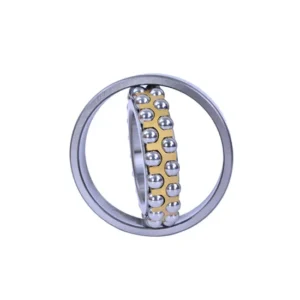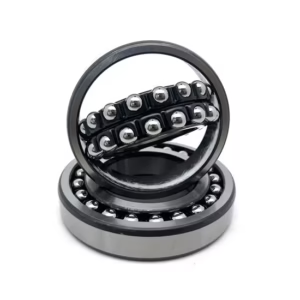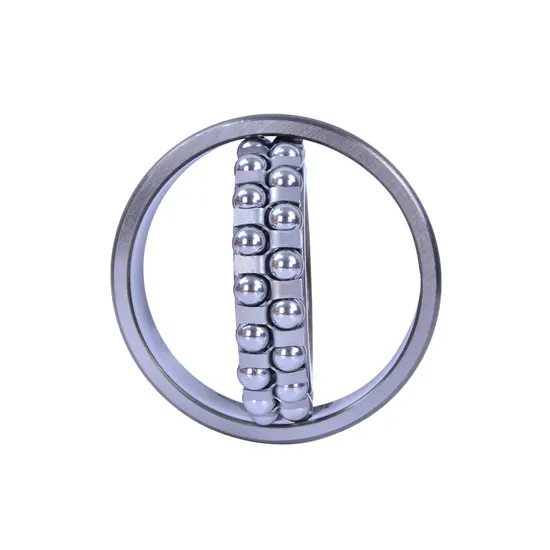
Self-Aligning Ball Bearing
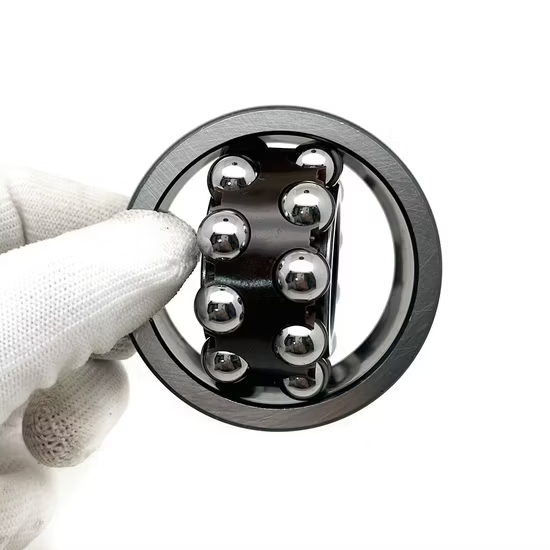
1217 2218 1319 Self-Aligning Ball Bearing — chrome steel construction supports grease or oil lubrication, accommodating shaft deflection and misalignment in marine deck machinery.
Authenticity via official QR — Every 1217 2218 1319 self-aligning ball bearing ships with traceable batch codes verifiable through the manufacturer’s official application to prevent counterfeit installation on deck winches.
| Parameter | Value |
|---|---|
| Designation | 1217 2218 1319 |
| Bearing Type | Self-Aligning Ball Bearing |
| Material | Chrome Steel |
| Limiting Speed | 5600-18000 r/min |
| Vibration Level | V1 V2 V3 V4 |
| Clearance Class | C2 C0 C3 C4 C5 |
| Lubrication | Grease or Oil |
| Origin | China |
| Industry | Typical Applications |
|---|---|
| Marine & Offshore | Deck winch drums, mooring capstan shafts, crane slewing mechanisms |
| General Industrial | Textile machine rollers, conveyor pulley shafts, agricultural pump drives |
Matching the base designation without verifying internal clearances leads to thermal binding on exposed deck equipment.
Procurement teams often source replacement bearings by matching the basic number alone, overlooking critical internal variations. In high-salinity marine environments, installing a standard clearance unit where thermal expansion demands a wider fit results in rapid cage failure. I have seen deck winches seize within weeks because the cross-reference ignored the operational temperature delta and the resulting shaft expansion [NEED_CITE: bearing clearance selection under thermal gradients].
Shaft misalignment is inevitable on vessel decks subjected to continuous hull flexing and heavy dynamic loads. The 1217 2218 1319 self-aligning ball bearing accommodates these angular errors through its spherical outer ring raceway. By supplying these specific designations with verified internal geometries, we ensure the rolling elements maintain optimal contact stress distribution even when the shaft deviates from its ideal axis.
Deck machinery operates under severe exposure to salt spray, high humidity, and fluctuating radial loads from wire rope tension. Standard open bearings quickly succumb to raceway corrosion, while inappropriate seal types introduce excessive friction heat at higher speeds. Selecting the correct lubrication method and verifying the vibration grade are essential to prevent premature fatigue [NEED_CITE: rolling bearing failure mode classification per ISO 15243].
Selecting the appropriate clearance class directly impacts operational longevity. A C0 clearance might suffice for ambient textile machinery, but marine deck winches exposed to direct solar radiation and friction heat require C3 or C4 to prevent internal preload locking. Furthermore, specifying a stricter vibration level ensures the chrome steel rolling elements operate smoothly, minimizing the micro-vibrations that accelerate grease degradation in poorly damped agricultural pump drives.
Overlooking internal design nuances leads to catastrophic damage rather than simple wear. When a standard clearance bearing is forced into a high-thermal application, the resulting thermal binding destroys the cage and scores the raceway. This unplanned downtime on a critical mooring capstan voids equipment warranties and triggers costly emergency logistics [NEED_CITE: ISO 281 bearing life calculation under misalignment and thermal stress].
We address cross-reference errors by aligning clearance, cage material, and precision suffixes simultaneously, ensuring the replacement perfectly matches the OEM requirement. Our inventory covers mixed-brand requests in a single shipment, eliminating the delays of coordinating multiple suppliers for a single deck machinery overhaul. Every batch undergoes strict dimensional verification to confirm the spherical outer raceway geometry before dispatch. We also provide application-based selection reviews to validate your load, speed, and temperature parameters against the chosen designation.
Share your exact radial and axial loads, operational speeds, and ambient temperature ranges so we can verify the L10 life and clearance selection. Provide the OEM equipment number or the existing bearing’s full designation, including all suffixes, for a precise cross-reference check. Our technical team will confirm the optimal lubrication and sealing configuration for your specific deck machinery or industrial application.
Q: Why is checking the clearance suffix critical when replacing these bearings?
A: Base numbers only define the physical envelope. Deck machinery exposed to high ambient heat and friction requires wider internal clearances like C3 or C4 to accommodate thermal expansion. Installing a standard C0 unit in these conditions causes thermal binding, leading to rapid cage failure and shaft seizure under load.
Q: How do I verify the authenticity of the supplied bearings?
A: Every unit ships with verifiable batch documentation. You can scan the packaging QR code using the manufacturer’s official mobile application to confirm the production lot, material origin, and factory test results, ensuring no counterfeit components enter your critical marine systems.
Q: What information is needed to cross-reference an existing OEM part?
A: Provide the complete OEM part number or the full bearing designation stamped on the existing unit, including all suffixes for clearance, cage, and seals. We will match these internal specifications exactly, rather than just supplying a basic dimensional equivalent that might fail under your specific operational loads.
Q: How should I choose between grease and oil lubrication for deck winches?
A: Grease is generally preferred for sealed or shielded deck winch bearings as it provides a physical barrier against salt spray and requires less frequent maintenance. Oil lubrication is reserved for high-speed applications or systems with centralized oil circulation that can continuously dissipate friction heat and flush out contaminants.
Our engineers will respond within 12 hours with a tailored solution.
Request Quote| Bearing Type | Self-Aligning Ball Bearing |
| Brand | SKF |
| Quality Standard | ISO 9001 / TS 16949 |
| Precision Grade | P0 / P5 / P6 (custom) |
| Material | Chrome Steel / Stainless |
| Cage Material | Steel / Brass / Polyamide |
| Lubrication | Grease / Oil (specify) |
| Operating Temp. | -40°C to +200°C |
| Min. Order Qty | 1 pc (samples available) |
| Prototype Lead Time | 7 Working Days |
| Load Capacity | Contact for C0/Cr values |
| Speed Rating | Contact for ndm limit |
| Vibration Level | Z1 / Z2 / Z3 (custom) |
| Noise Level | V1 / V2 / V3 (custom) |
| Fatigue Life | L10h per ISO 281 |
| Sealing Options | Open / Z / 2Z / RS / 2RS |
Our engineering team can modify bearing dimensions, materials, seals, and clearances to meet your specific operating requirements. Submit your drawing or spec sheet for a tailored proposal.
Main shaft bearings, gearbox bearings, and generator bearings for onshore and offshore wind turbines.
Heavy-duty bearings for crushers, conveyors, and rotary equipment in extreme dust and shock-load environments.
High-temperature bearings for rolling mills, continuous casting, and furnace applications.
Wheel hub bearings, transmission bearings, and e-motor bearings for passenger and commercial vehicles.
Axle box bearings, traction motor bearings, and gearbox bearings meeting EN/UIC railway standards.
High-precision spindle bearings, angular contact bearings, and super-precision bearings for CNC and robotics.
Our engineers analyze your operating conditions -- load, speed, temperature, environment -- and select or design the optimal bearing solution to maximize service life and reduce total cost of ownership.
Need non-standard dimensions, special materials, or modified clearances? We can modify standard SKF bearings or manufacture fully custom solutions with a 7-day prototype turnaround.
When bearings fail prematurely, our team conducts root-cause analysis using advanced diagnostic tools to identify the failure mode and recommend corrective action.
We deploy vibration monitoring, thermal imaging, and oil analysis programs that detect bearing deterioration early -- reducing unplanned downtime by up to 40%.
Proper installation is critical to bearing performance. Our certified technicians provide on-site installation support, alignment verification, and operator training worldwide.
From initial selection through end-of-life, our dedicated account managers provide scheduled maintenance plans, re-lubrication programs, and replacement forecasting for enterprise clients.
NDA protected · Free samples for orders > $50K · Reply within 12 hours